 A living, AI-narrated realm
The Lost Realms
Type what you want to do. A storyteller narrates the result — and quietly reshapes the world behind it.
One sentence.
The whole world responds.
No commands to memorize, no menus to click. Speak in plain language and an AI Game Master interprets your intent, narrates it in vivid prose, and records every consequence.
Your health, your inventory, an NPC's opinion of you, a secret passage newly revealed — the fiction and the game state move as one.
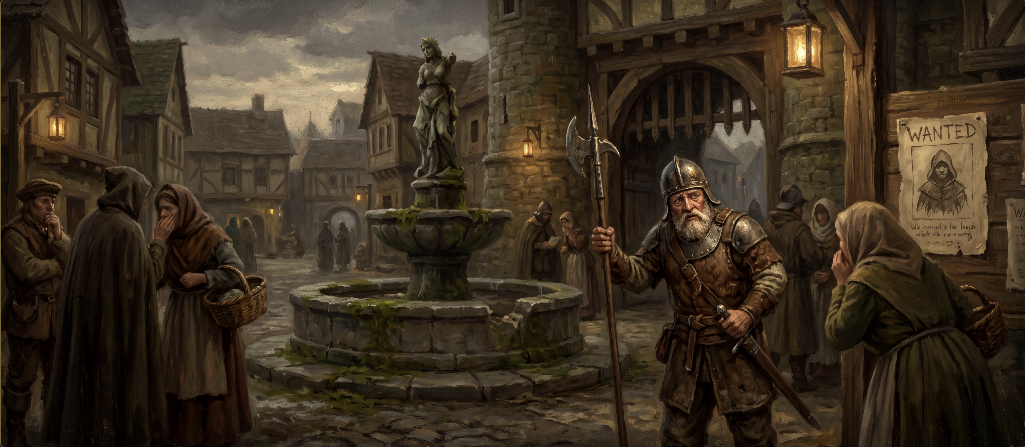
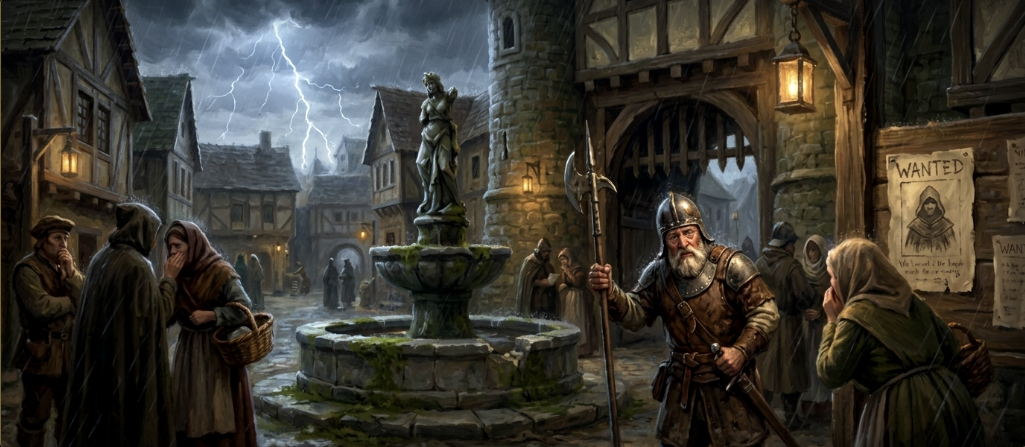
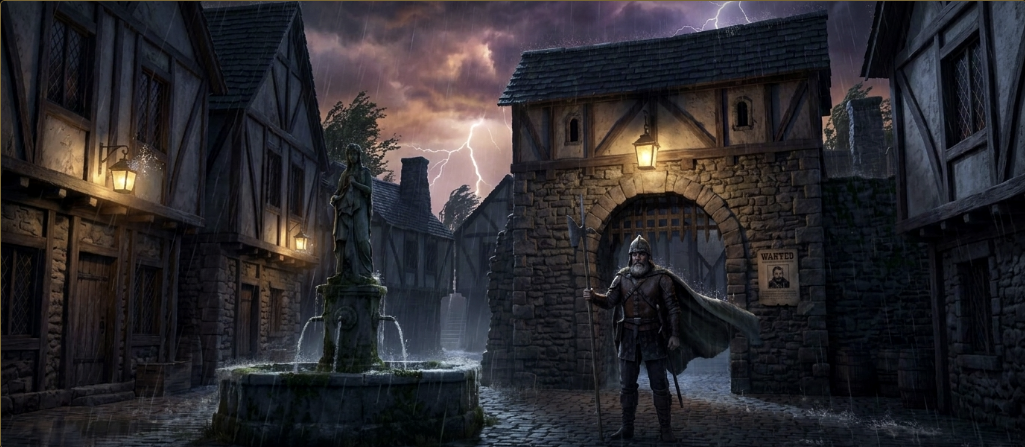
The realm doesn't pause for you
Roughly one real hour is one in-world day. Merchants keep their routines, NPCs wander off, and scenes are repainted as the light shifts from dawn to midnight — whether you're watching or not.
Your character. Your look.
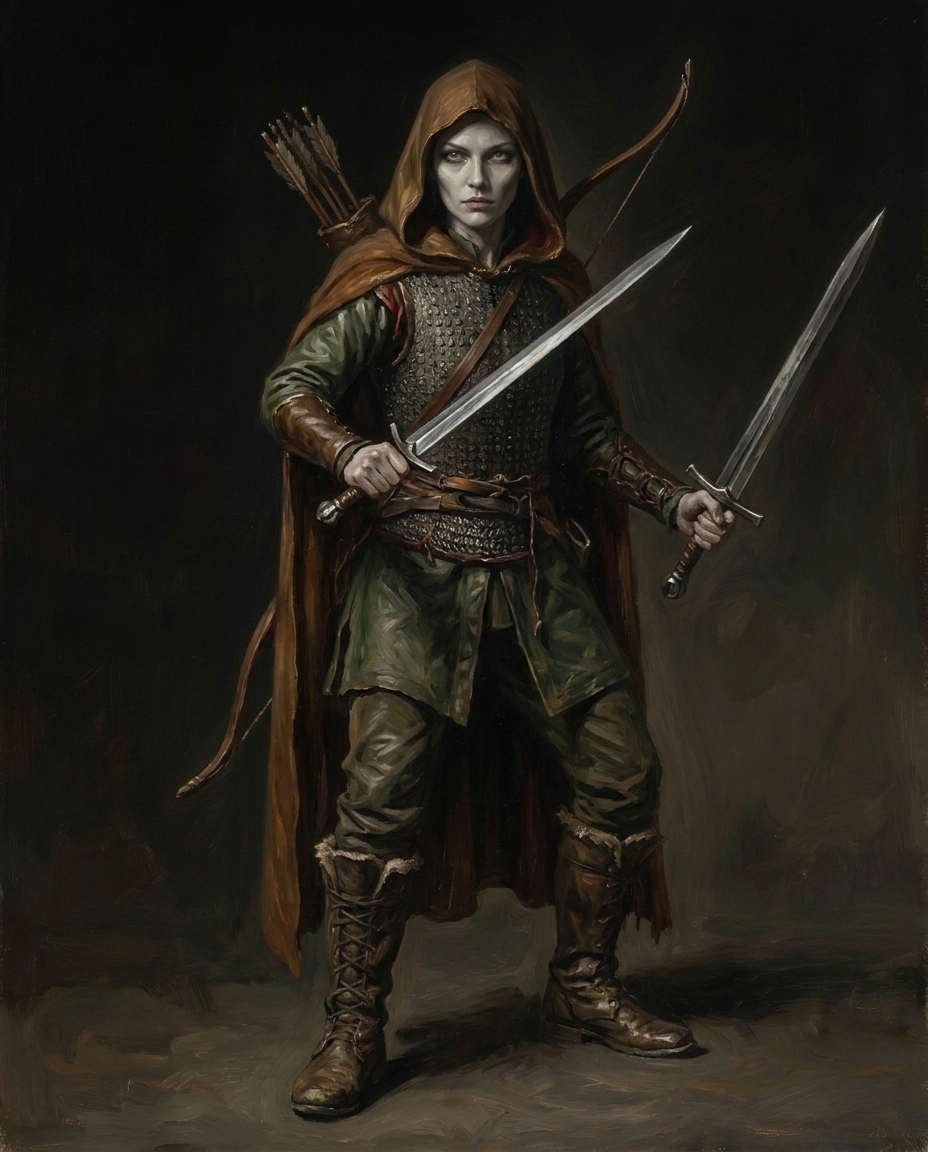
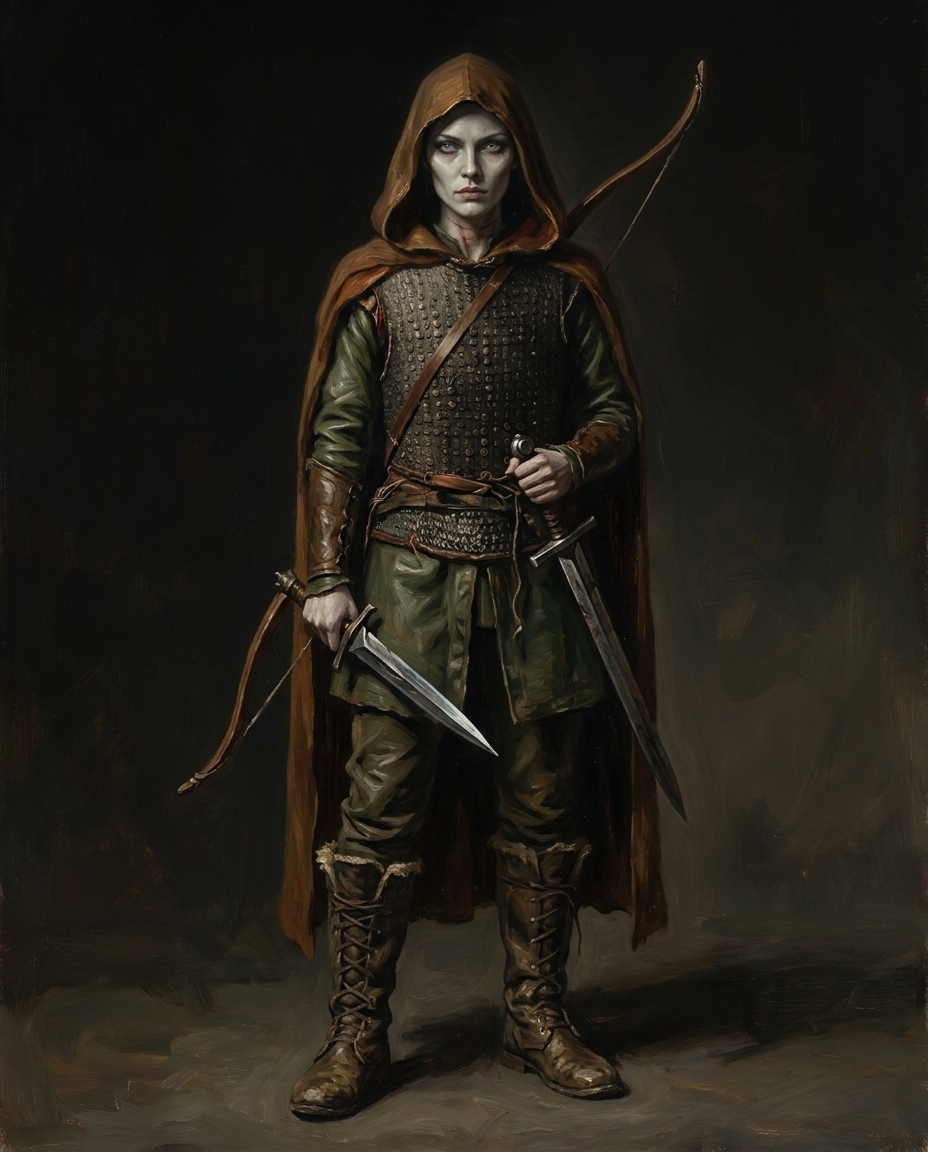
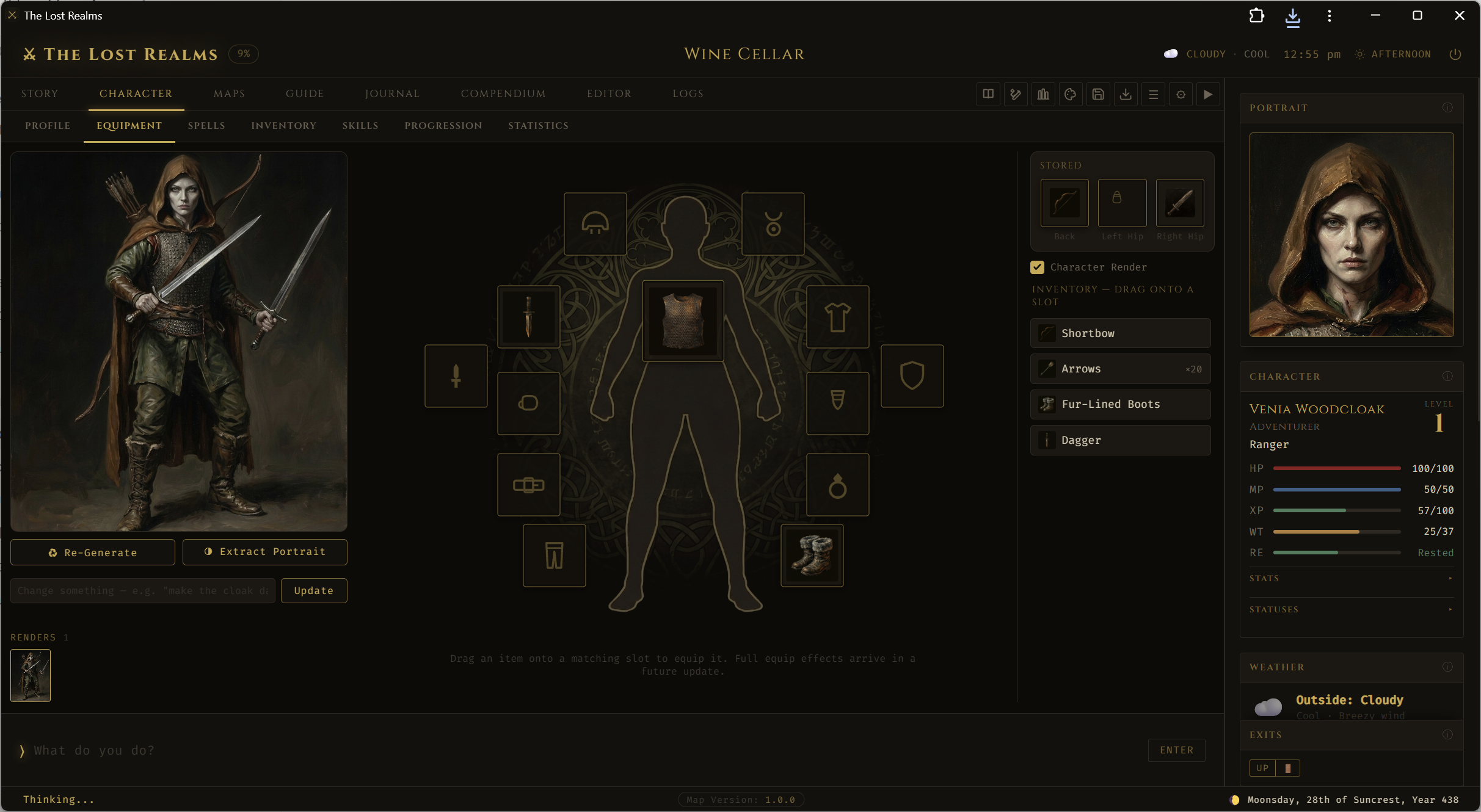
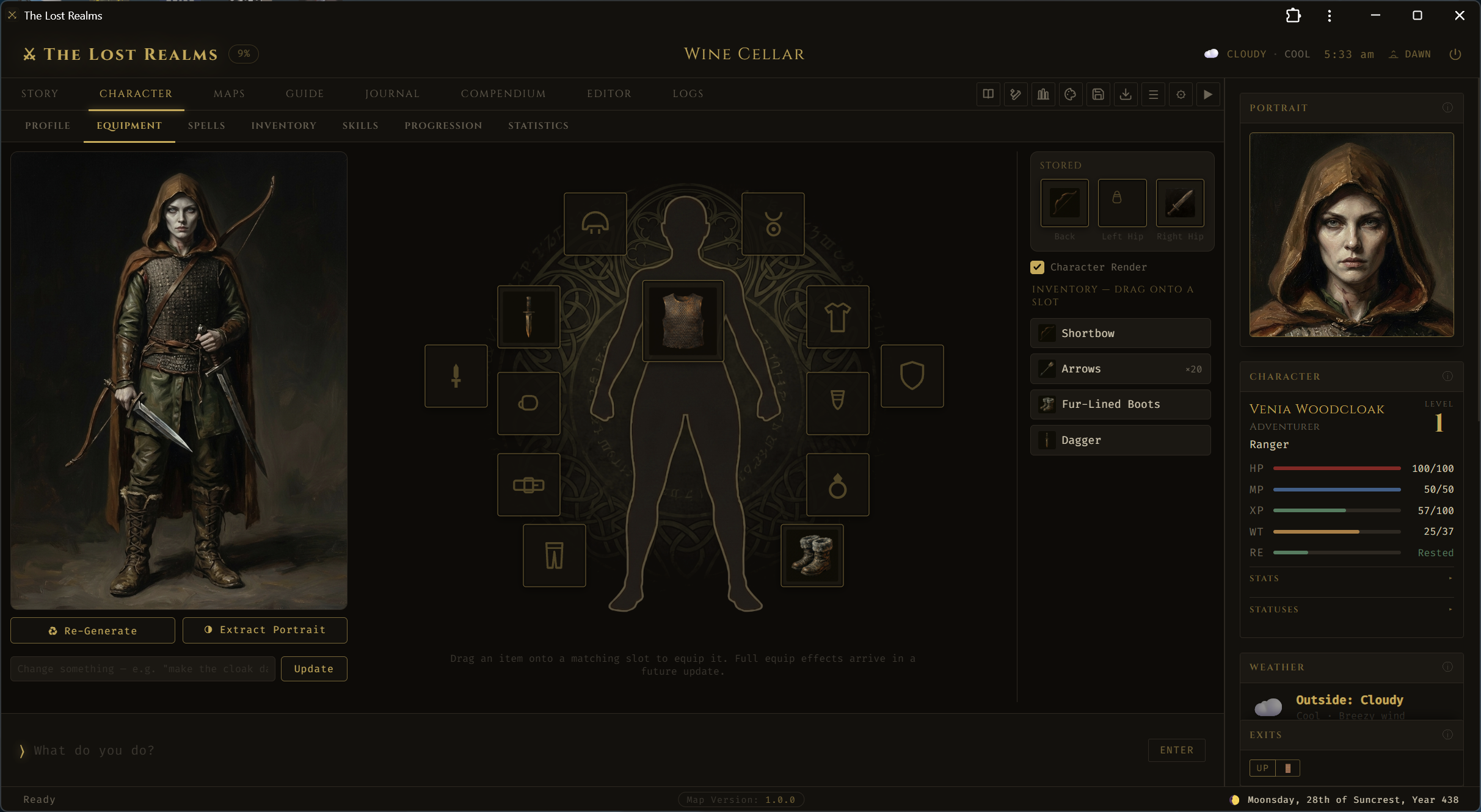
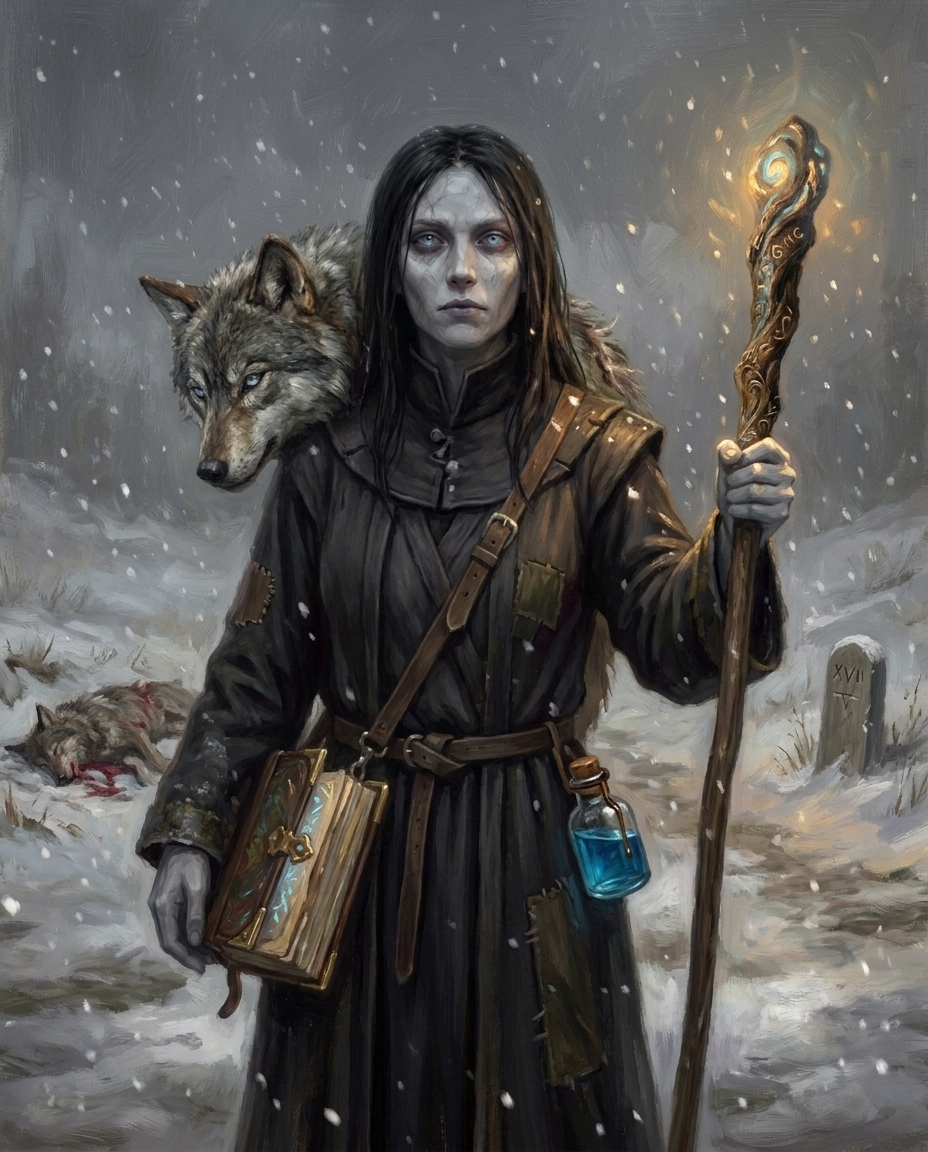
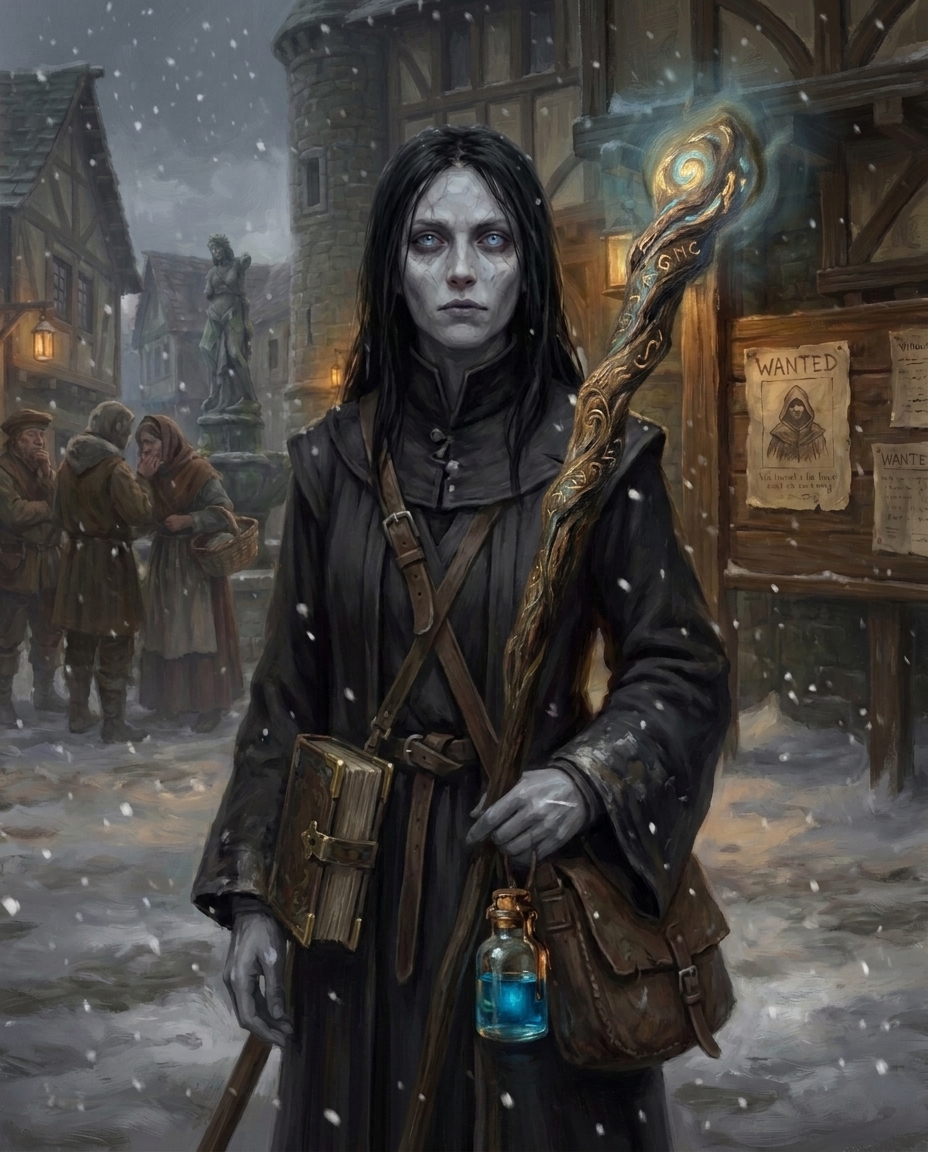
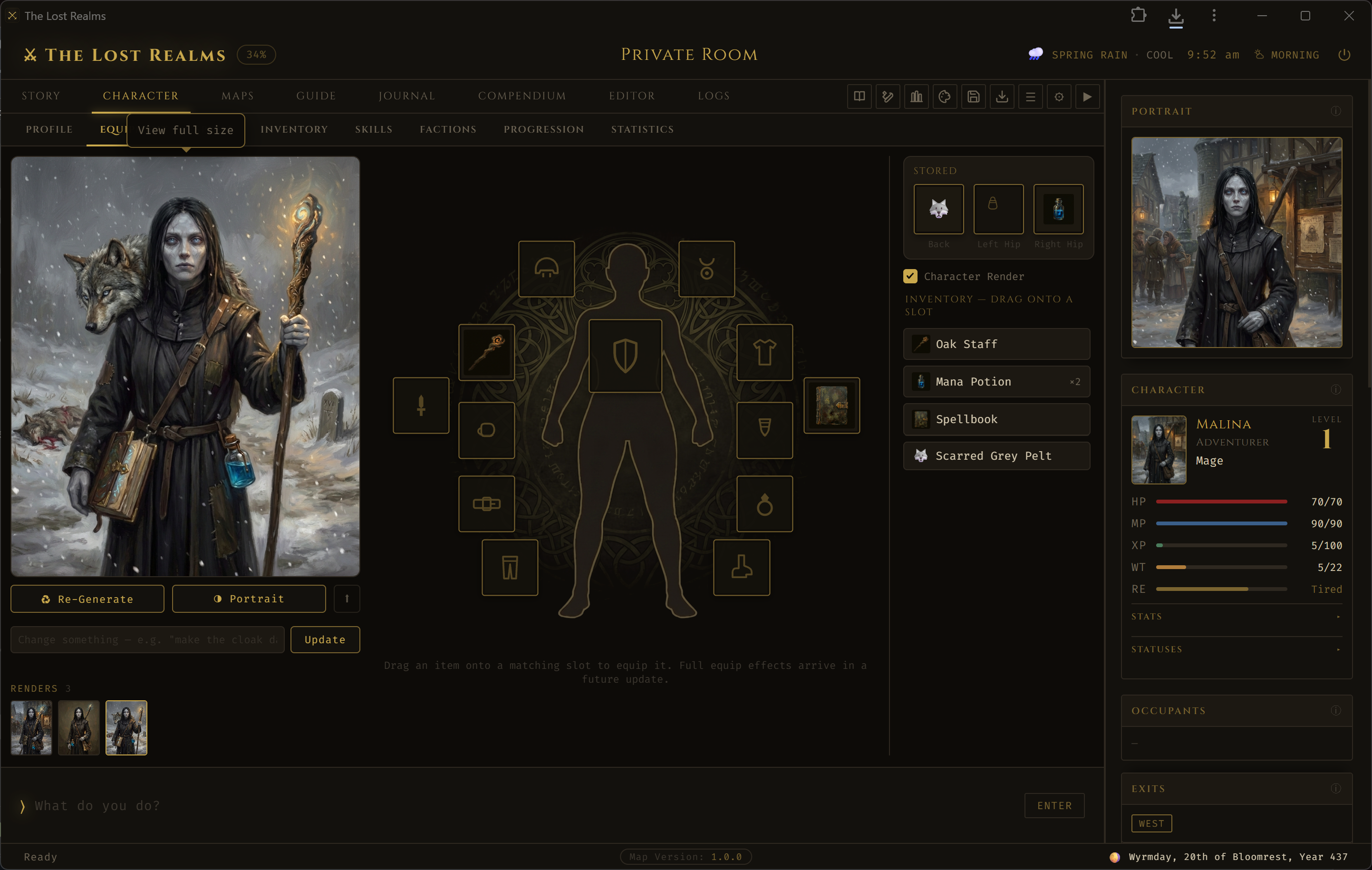
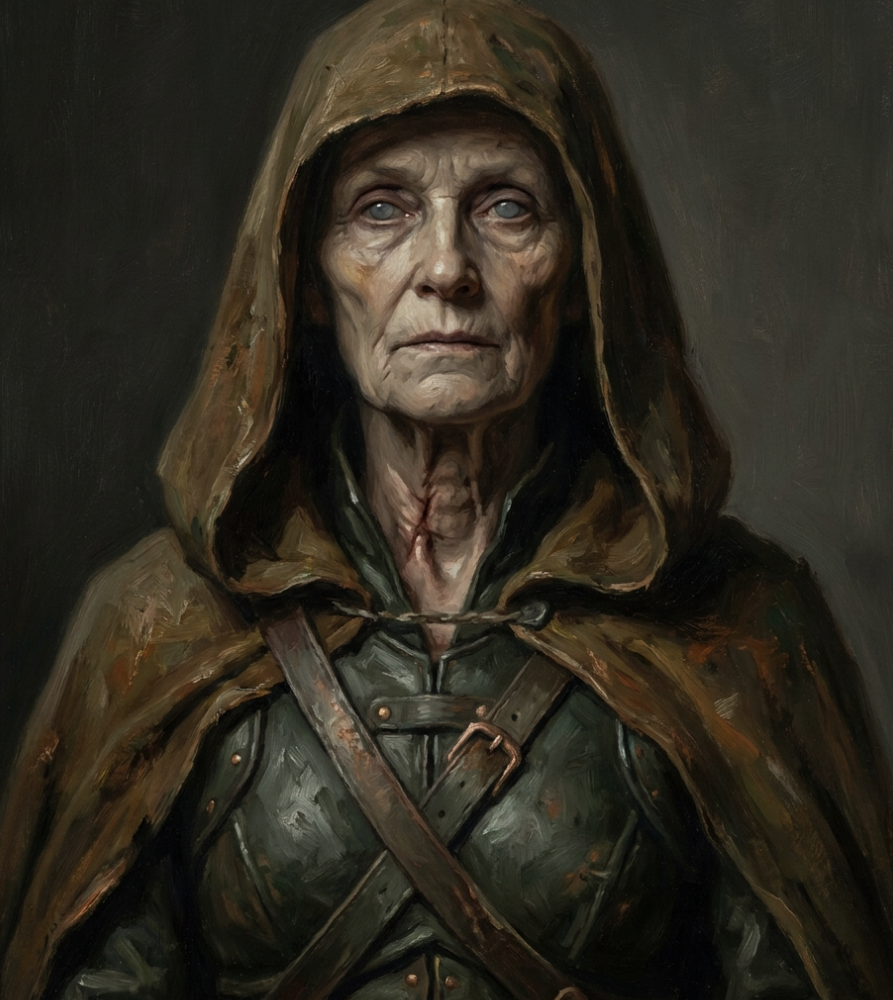
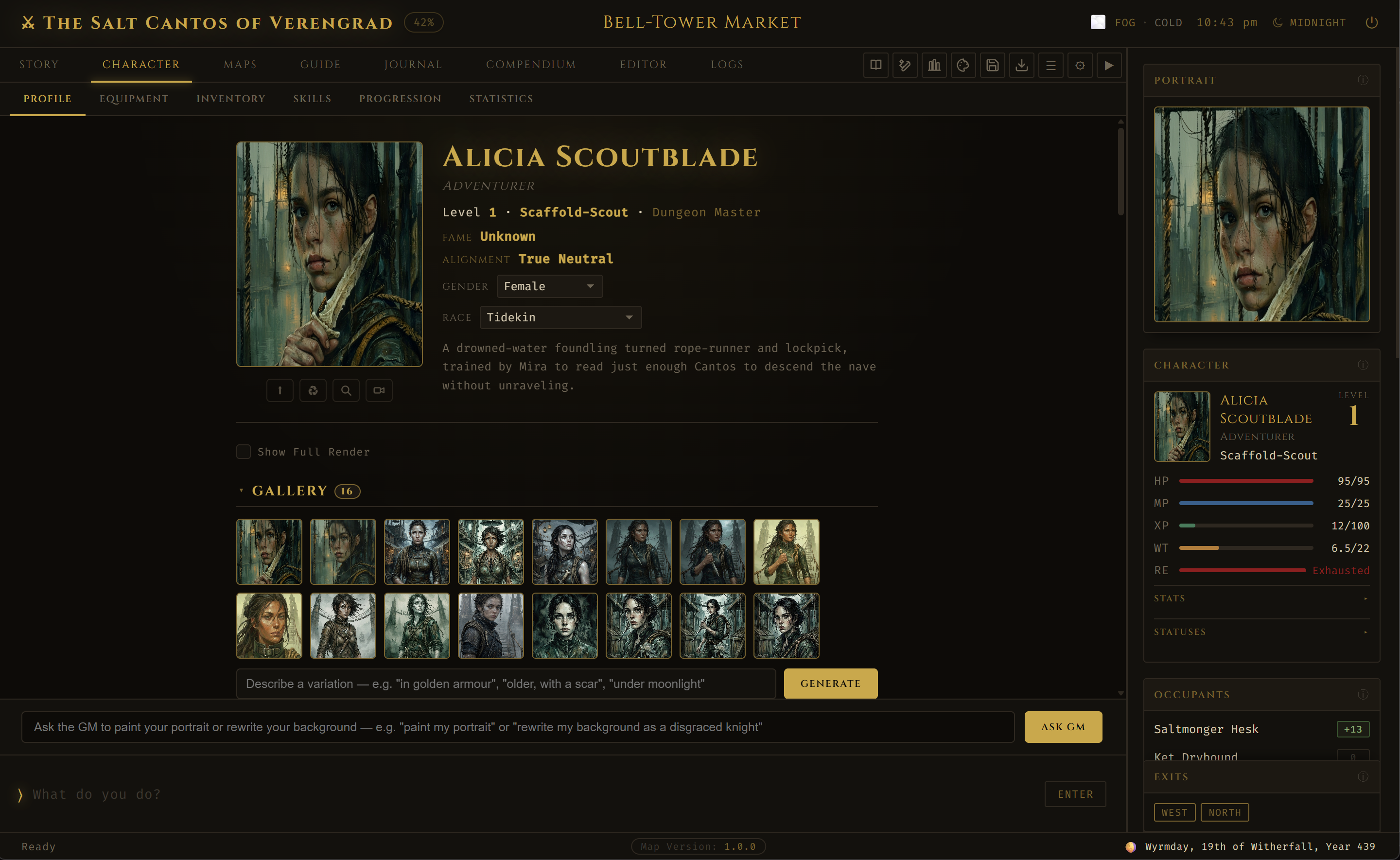
No sliders, no preset wardrobes. Describe your gear and your body in plain words — a hooded cloak the colour of rust, chainmail worn thin at the shoulder — and your full character portrait is painted to match. Change your mind, say so, and it is repainted.
You age gracefully
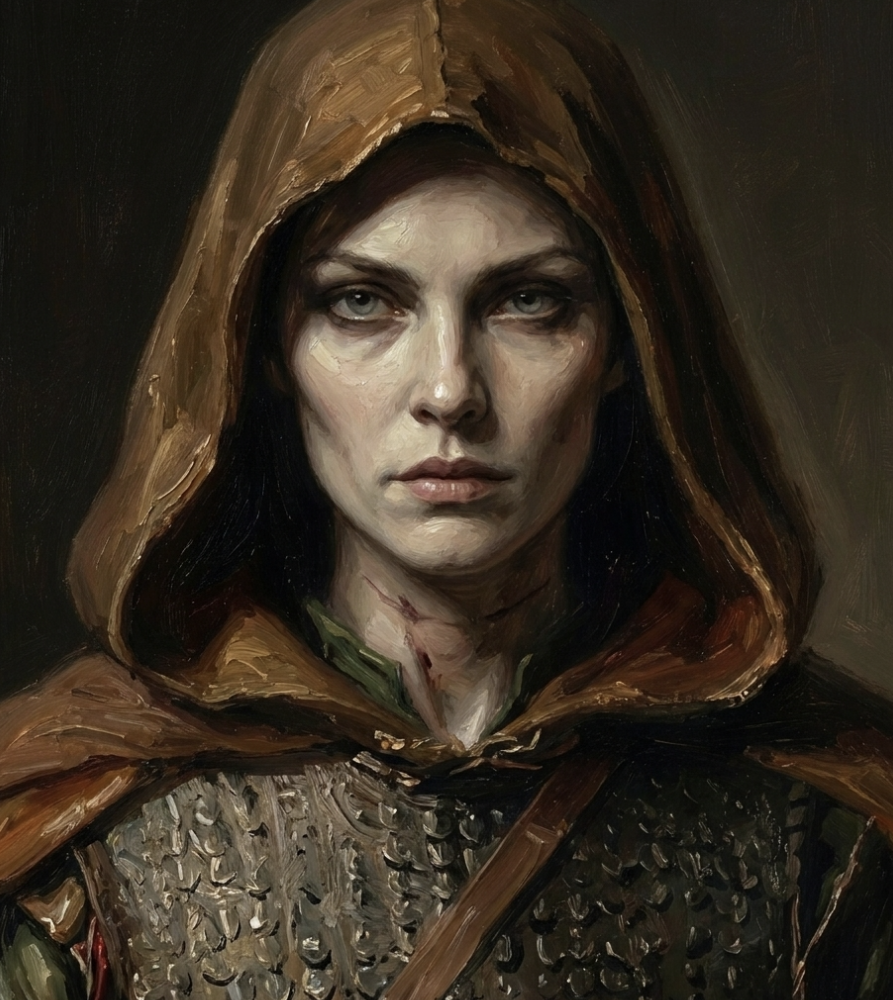
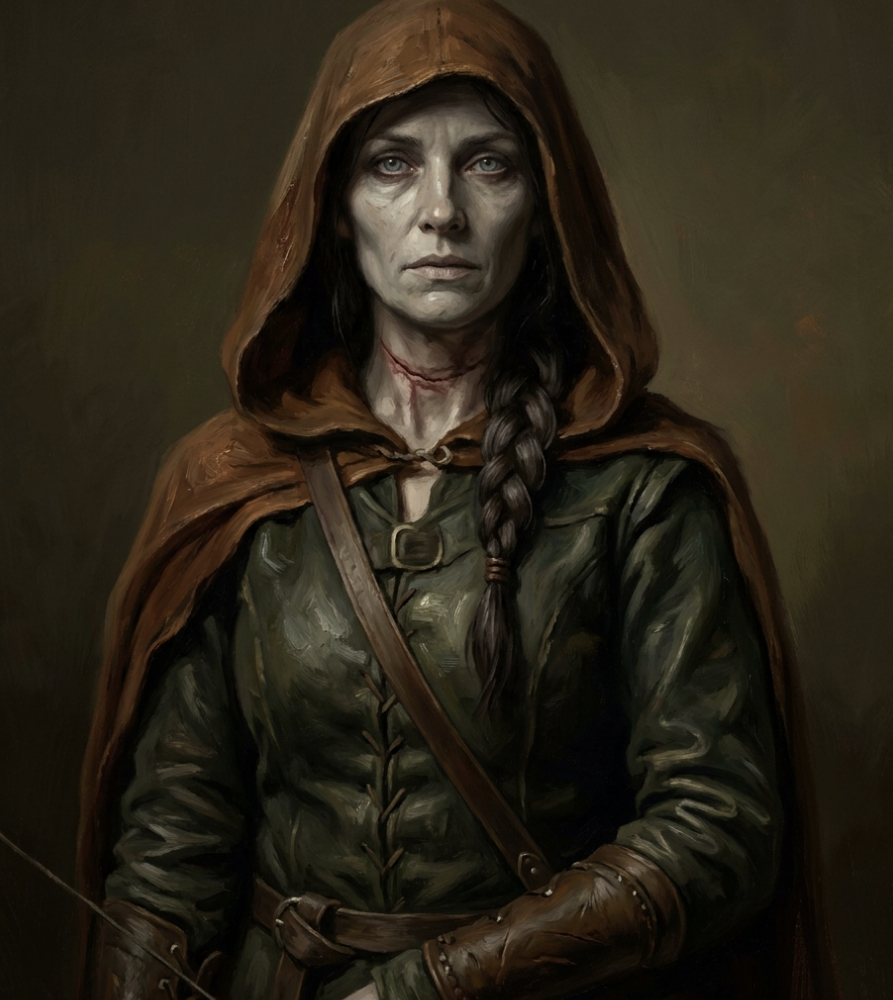
Every character is born on a date, and the realm keeps a real calendar and clock above them — twelve months, seven weekdays, and an hour that advances whether you are logged in or not. Your age is not a number you chose at creation. It is the distance between your birthday and today.
So the years tell. A ranger who spends two decades walking the same passes is painted as someone who has walked them: the face sharpens, then softens, then lines. Your portrait is repainted as you go, and the one hanging in your sidebar is the age you are now.
Which makes a birthday worth remembering, and a long campaign worth finishing.
Full day & night cycle
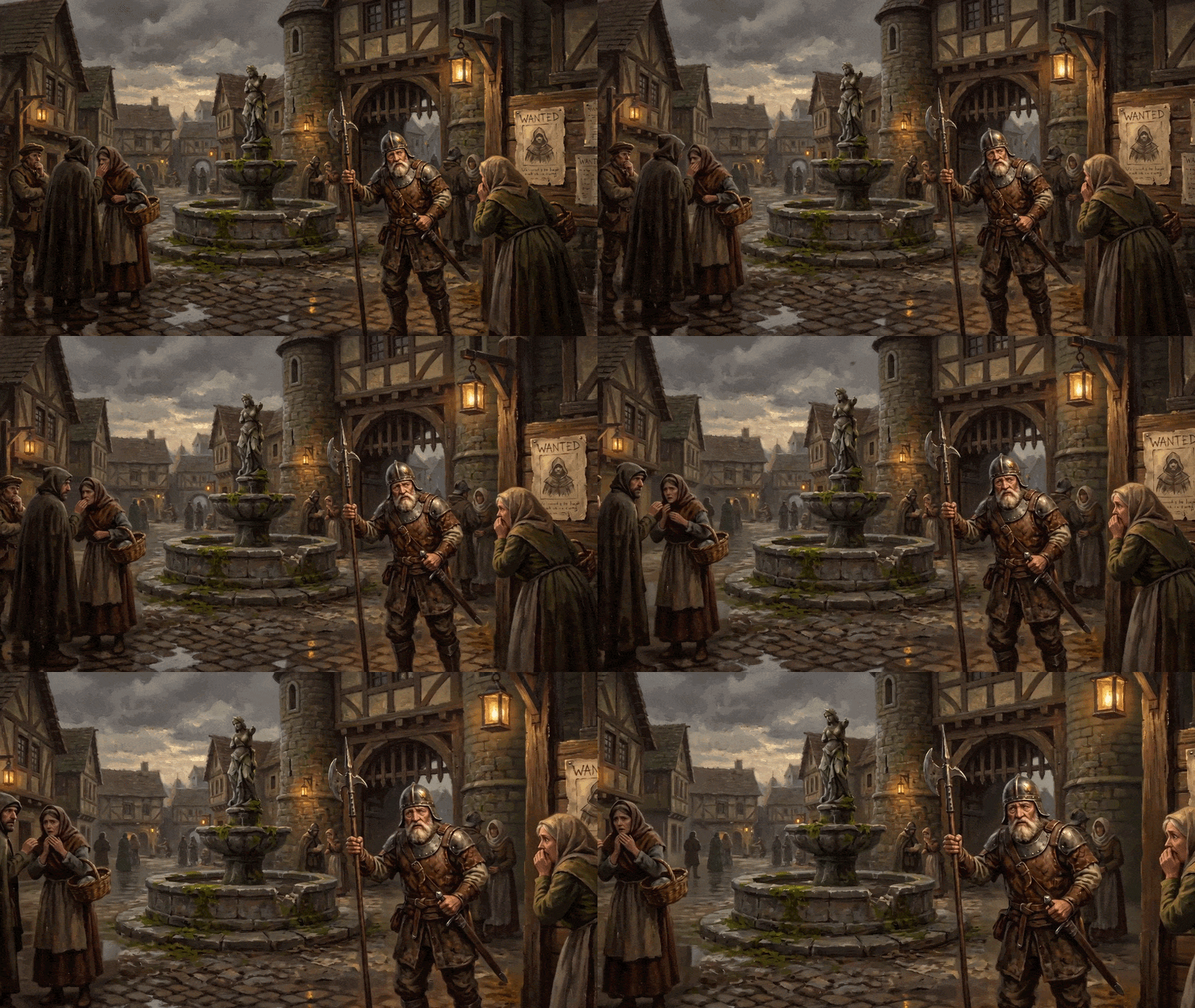
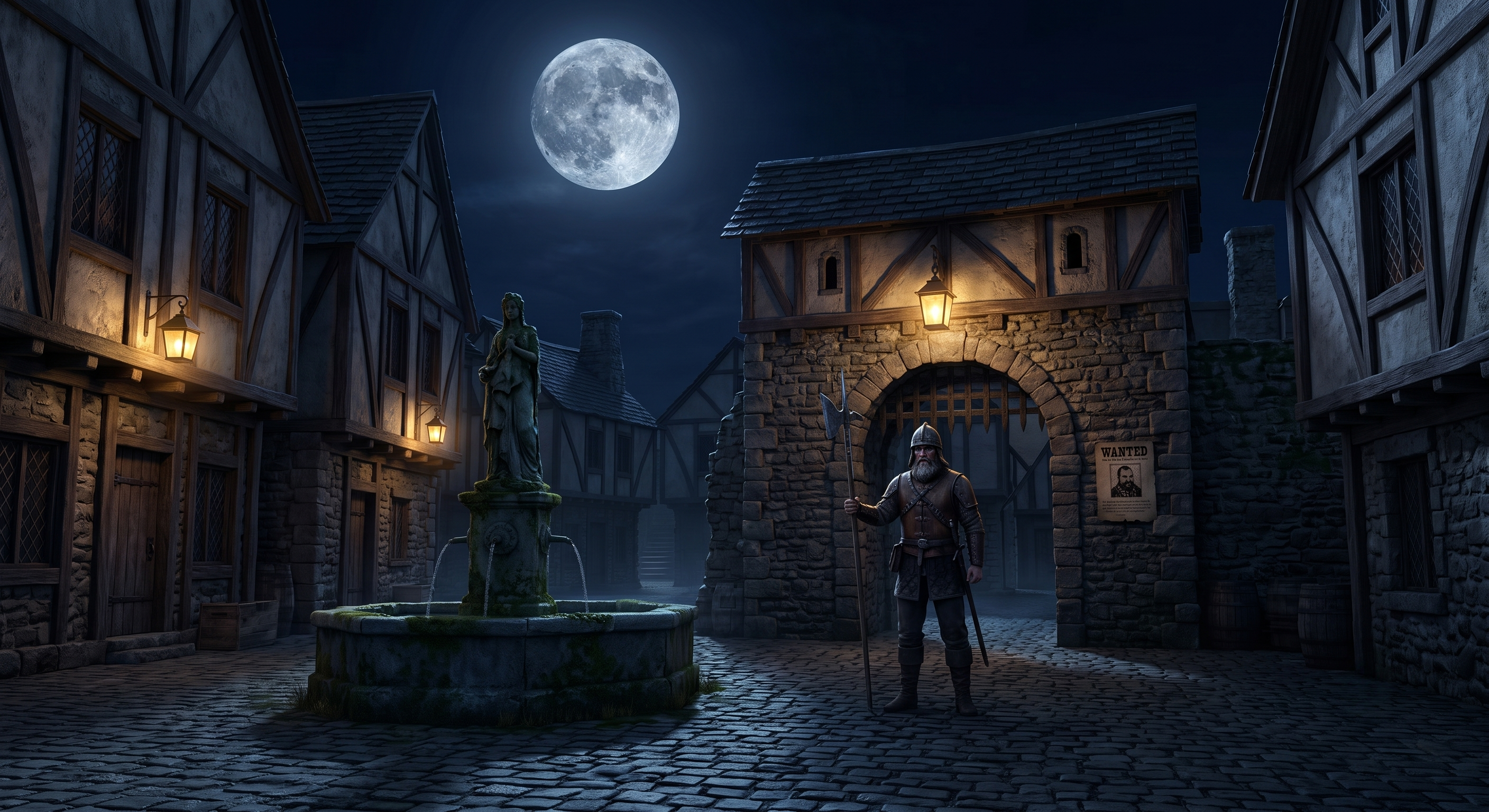
Six times of day carry the realm from Dawn through Morning, Afternoon, Evening and Dusk into Midnight. Every area changes its appearance — and its very description — as the hours pass. The same street that bustles under a grey noon sky falls silent and blue by moonlight. Lanterns take over from daylight, crowds thin to a lone watchman, and the prose is repainted to match.
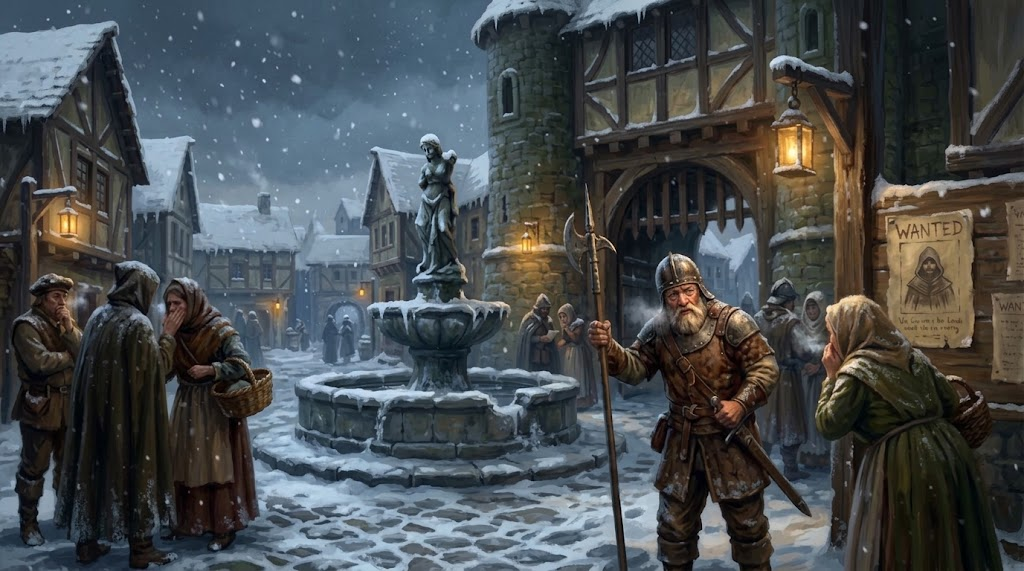
Above it all turns a calendar of twelve months, seven weekdays and eight phases of the moon — and a sky of its own, where each region's weather follows the season it is actually living through. Snow banks up in a mountain pass while rain sweeps the coast below, and the same square you know in summer becomes something else entirely under a foot of white.
A character, not an avatar
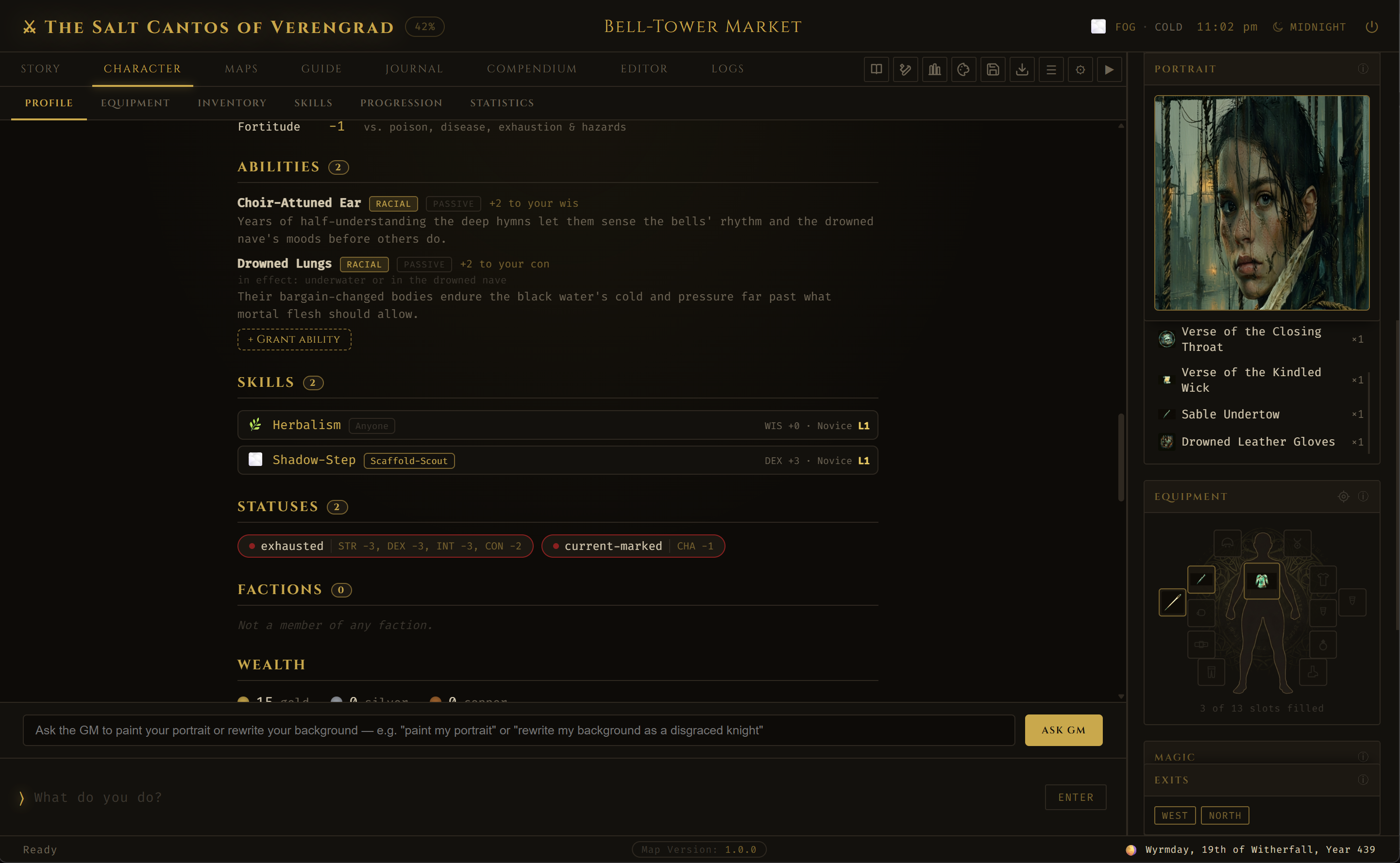
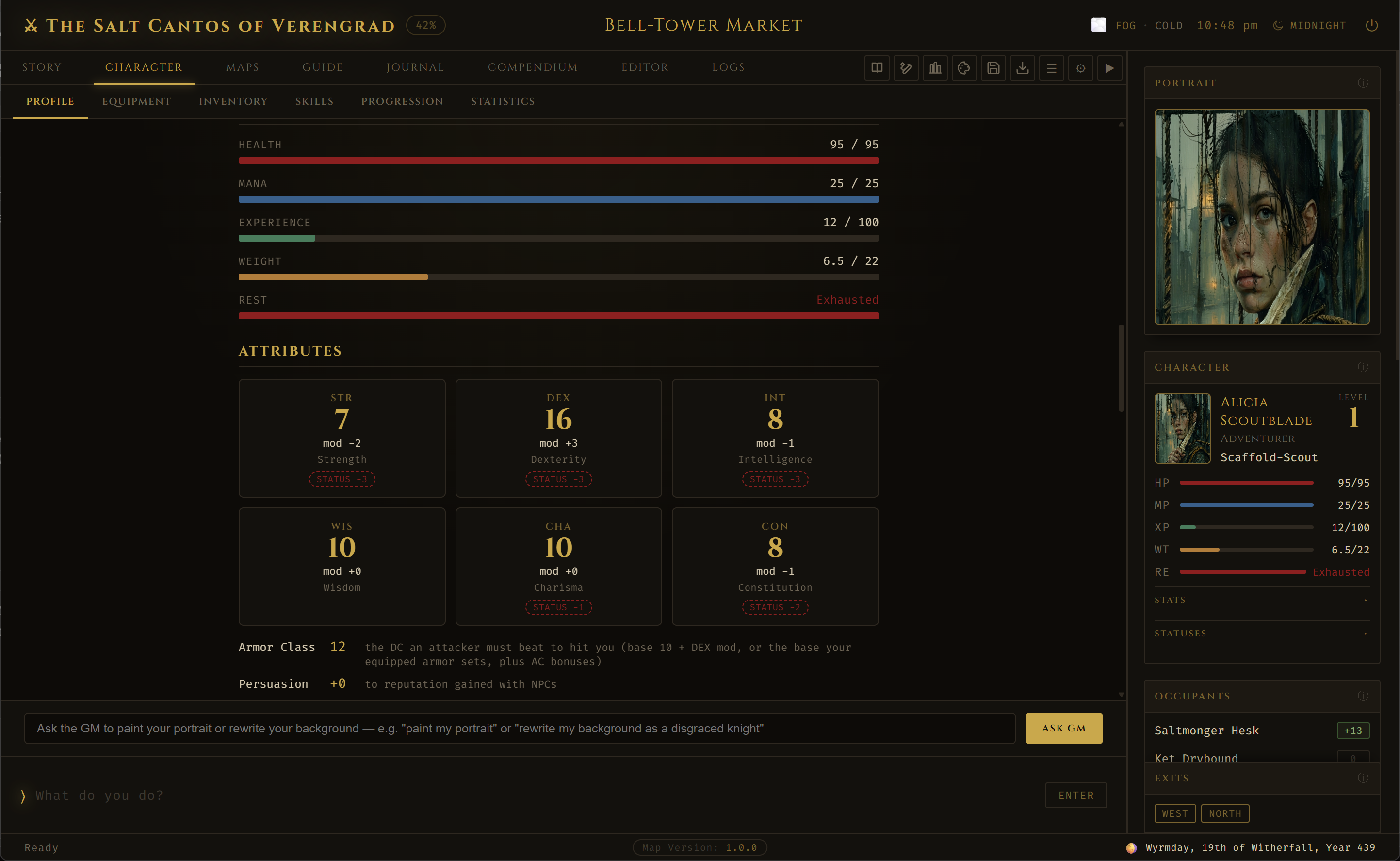
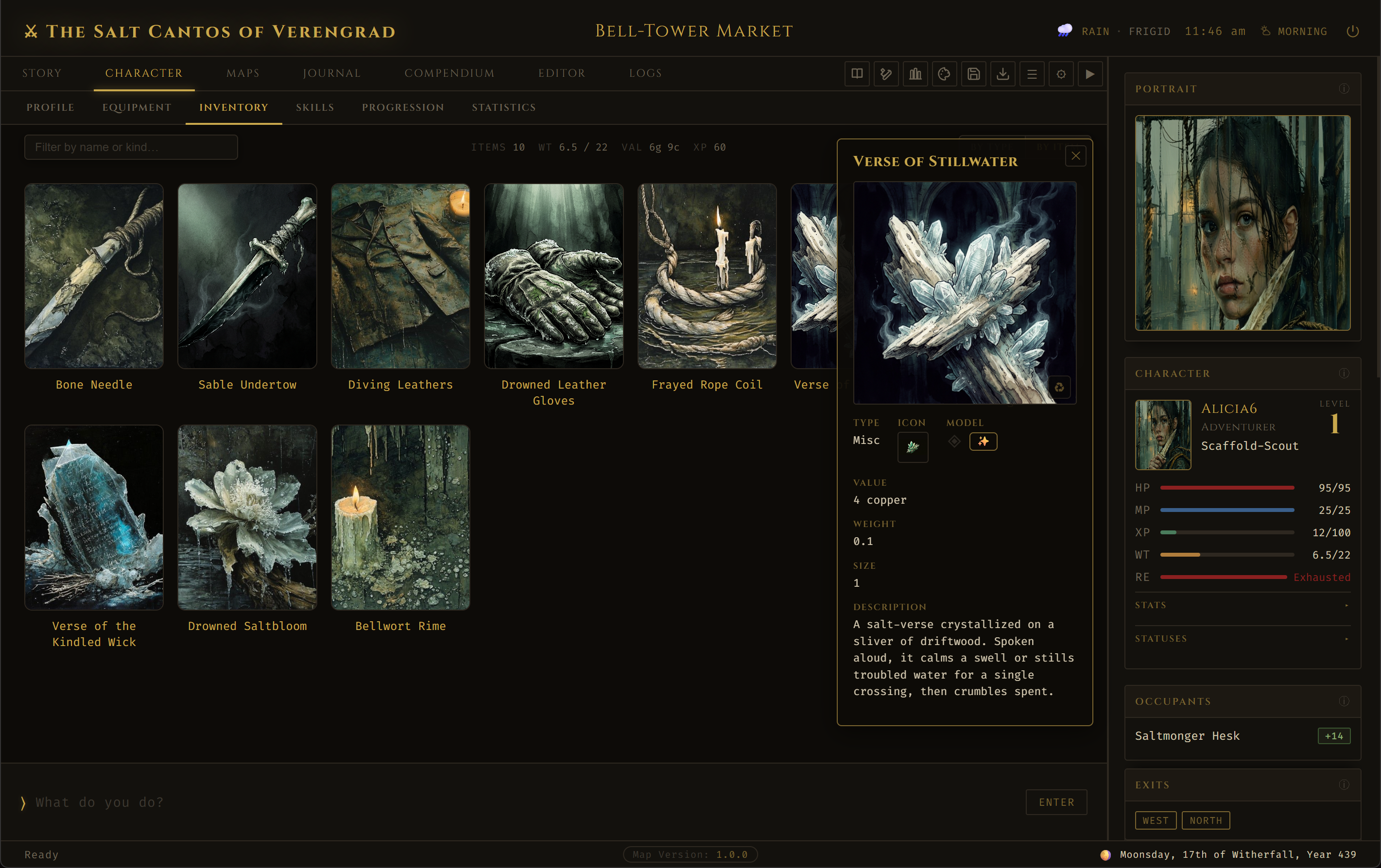
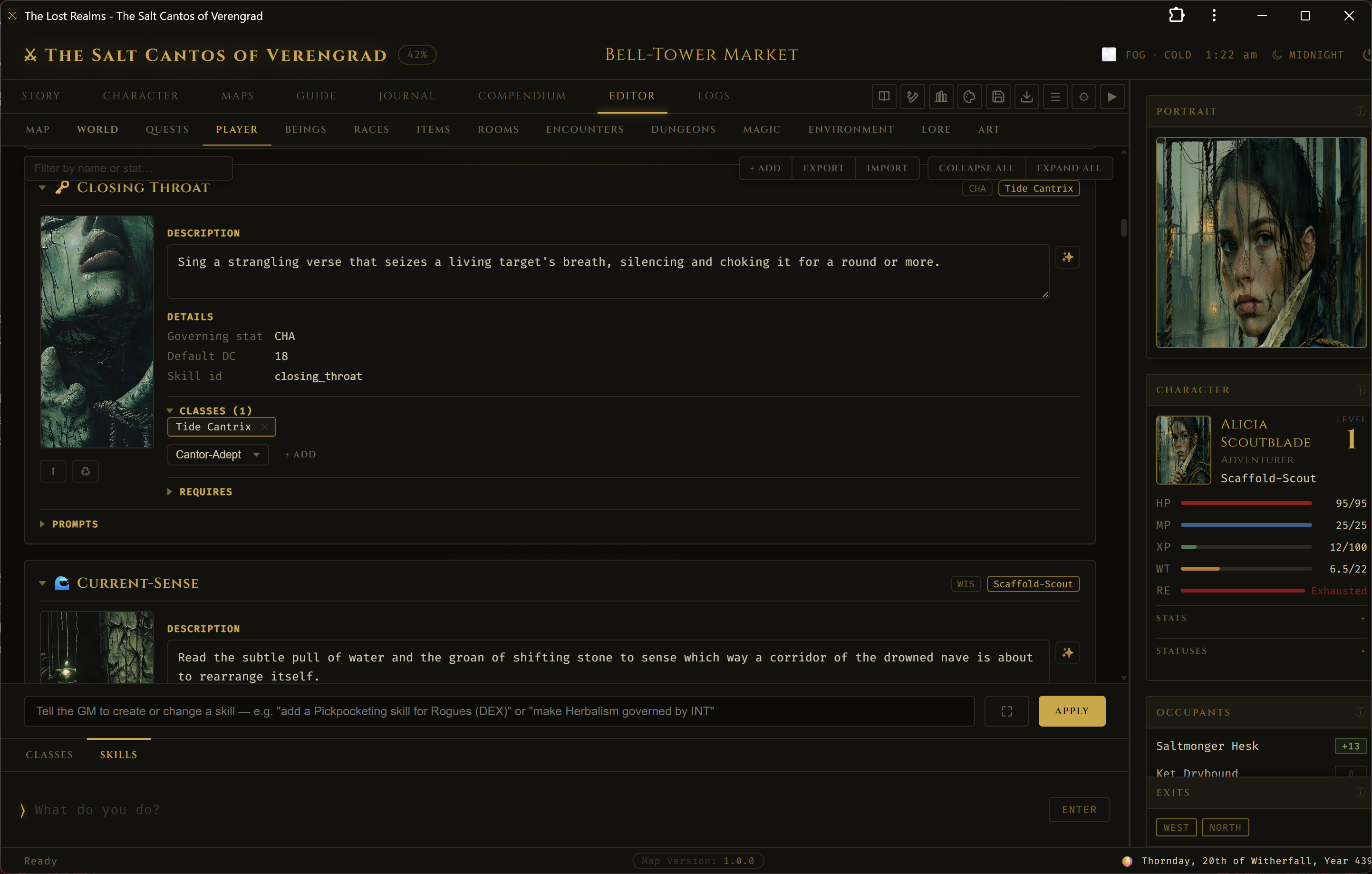
Six attributes, a class, and a level that climbs as you earn it. Skills are learned from books and hard practice; spells are carried in a field spellbook you memorise before you set out. Some knacks you never learn at all — they come with your blood, your blade, or the potion you just drank.
Poison, exhaustion and the weight on your back all press on the same sheet. Sleep it off at an inn, or make camp beneath the open sky — you never wake wholly restored.
The dice are yours to throw
A fight is fought in rounds. Initiative is rolled, blows are traded against armour, and when a spell or a poison comes for you the save is yours to make — with your own dice, from your own bag, at the moment the Game Master asks for them.
The world steps back so nothing wanders in mid-swing — but the fight itself gives no quarter. Take too long and the round resolves without you.
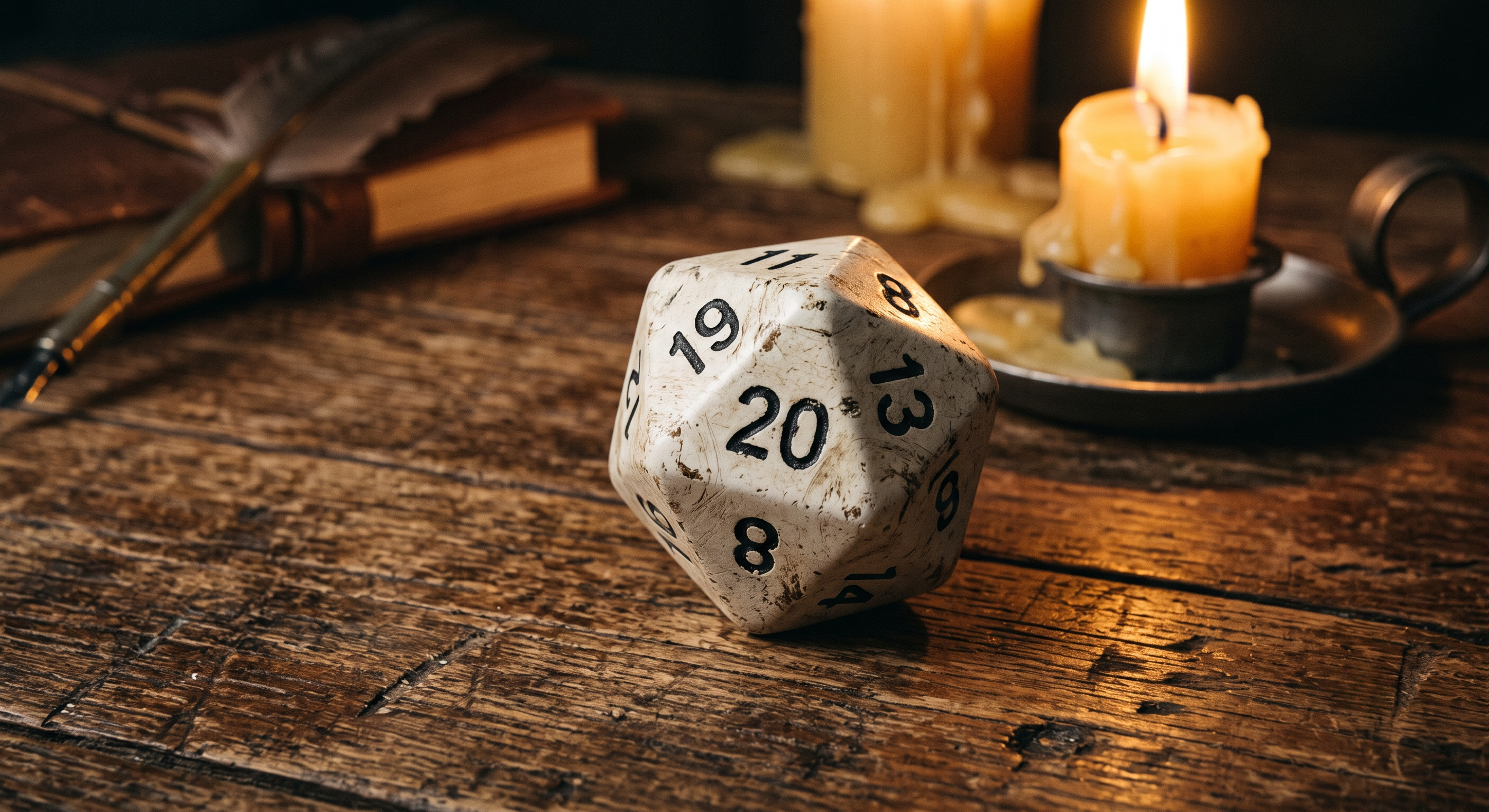
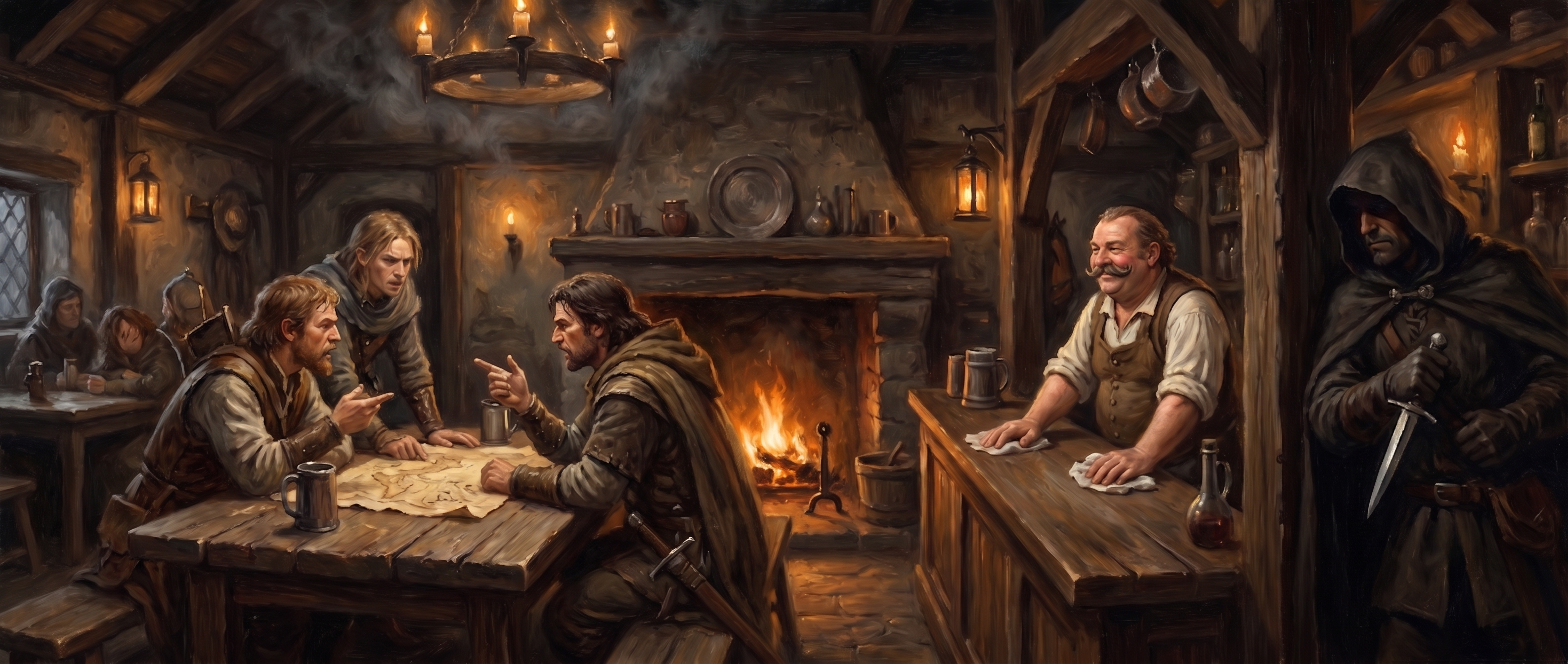
Rooms come alive
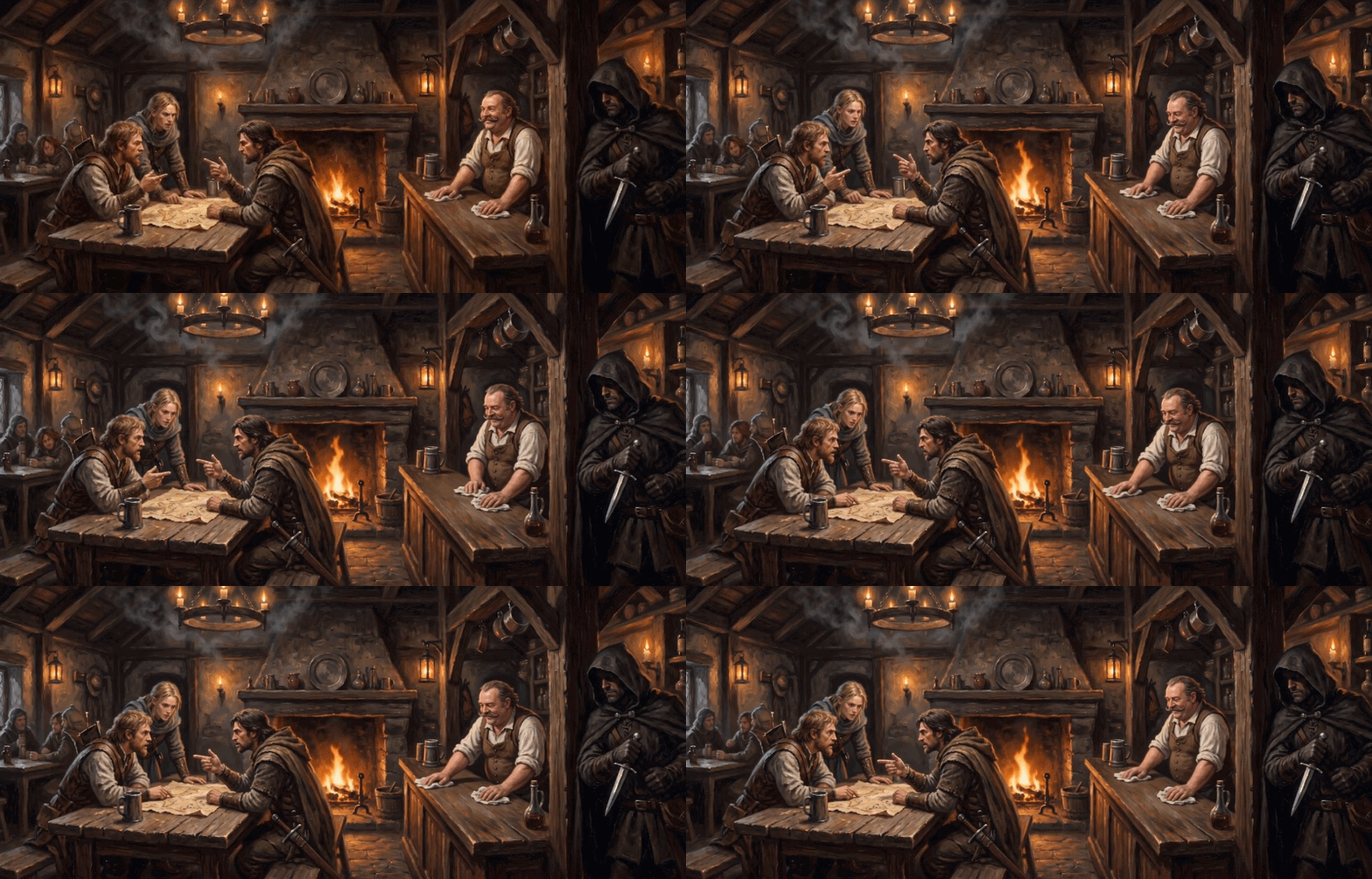
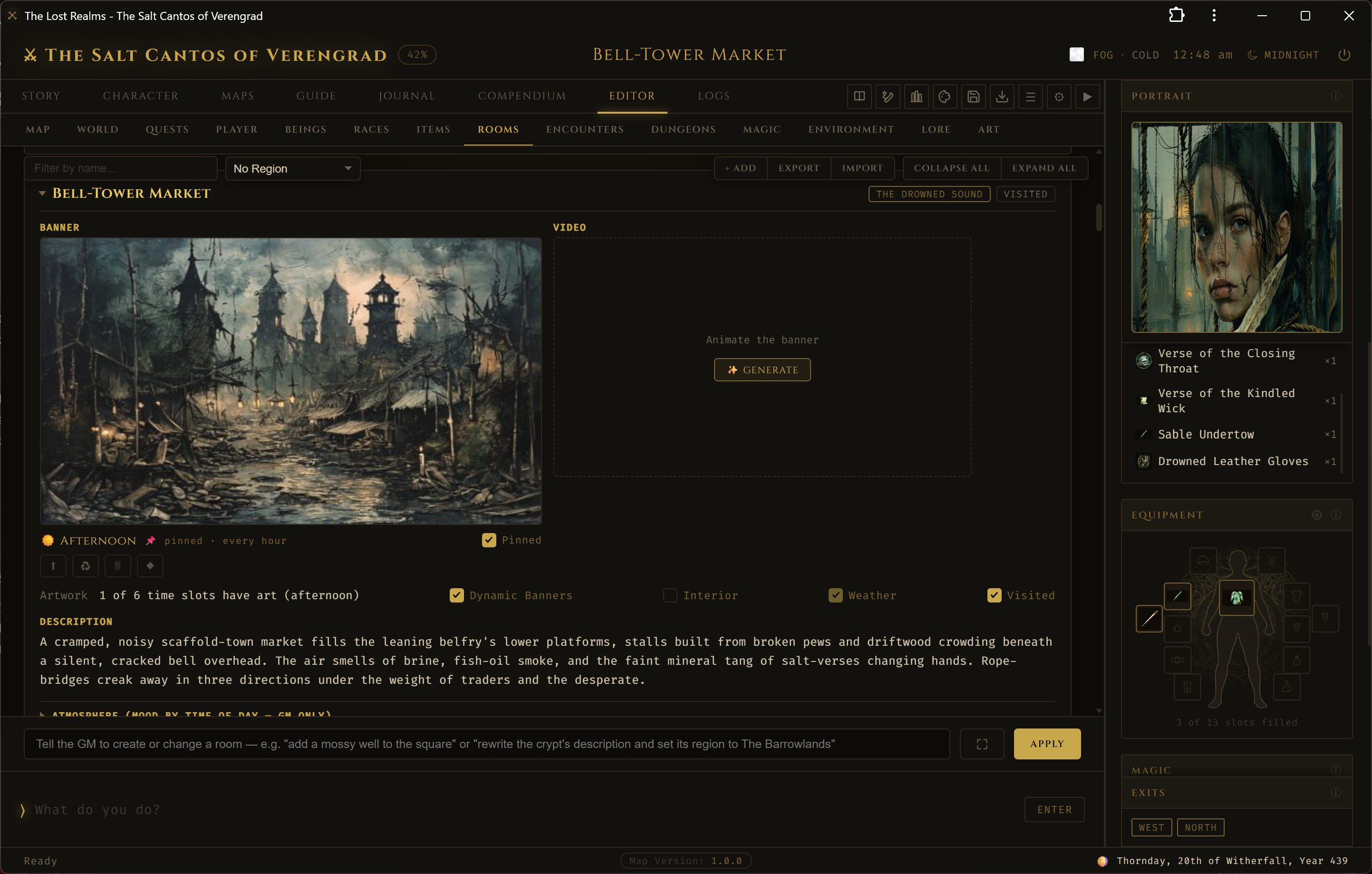
Describe any room and its banner is generated to match — a smoky inn, a flooded chapel, a merchant's back office. Then animate it in one click: the fire catches, the smoke drifts, and the man in the corner turns his knife over while the barkeep pretends not to see.
Build the depths, then walk them
You can use your own art for walls, doors, stairs, monsters, chests and more. Create secret walls and doors, challenging traversal puzzles and locked chests, all in one simple editor UI — then step into the corridor you just drew.
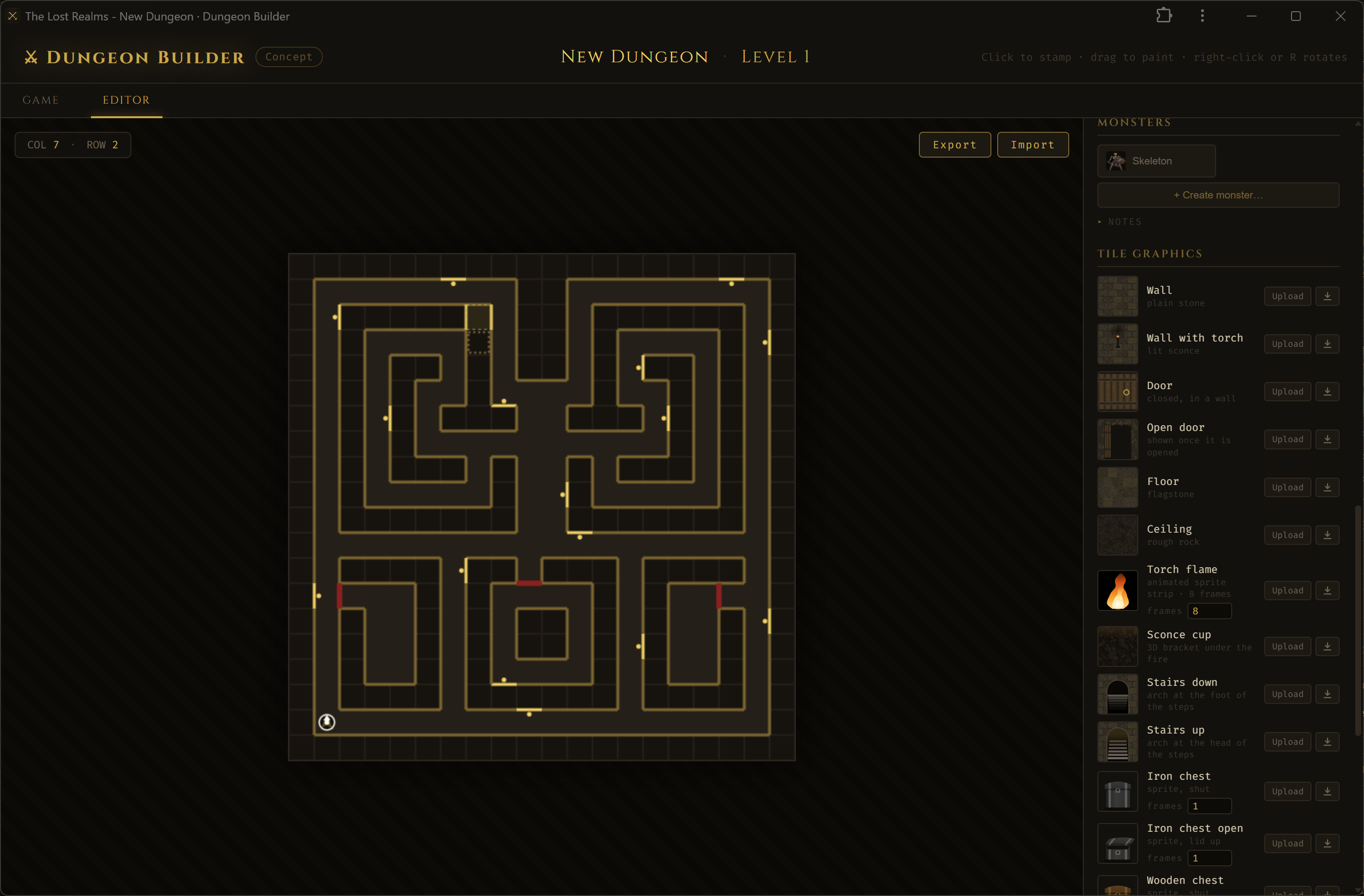
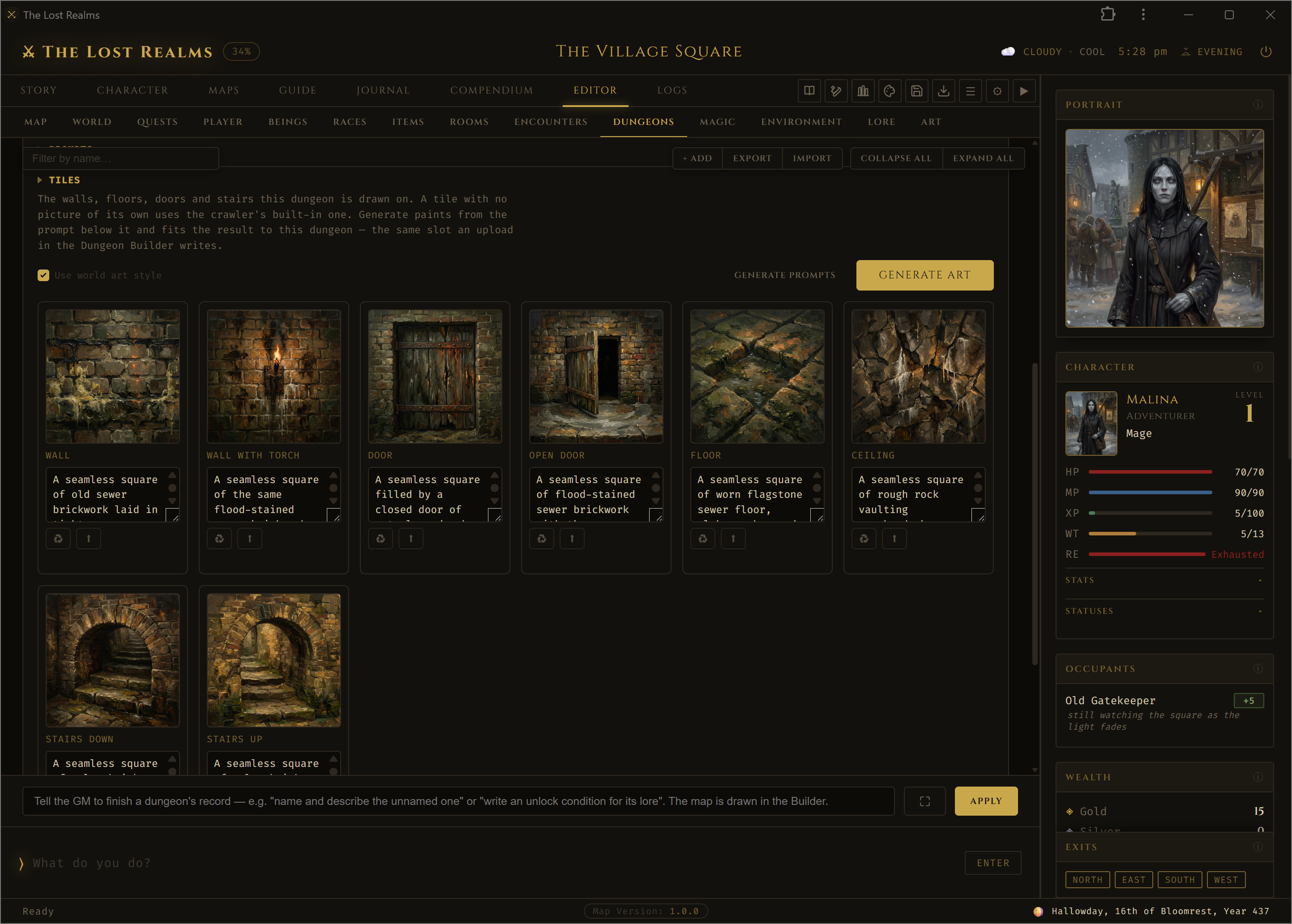
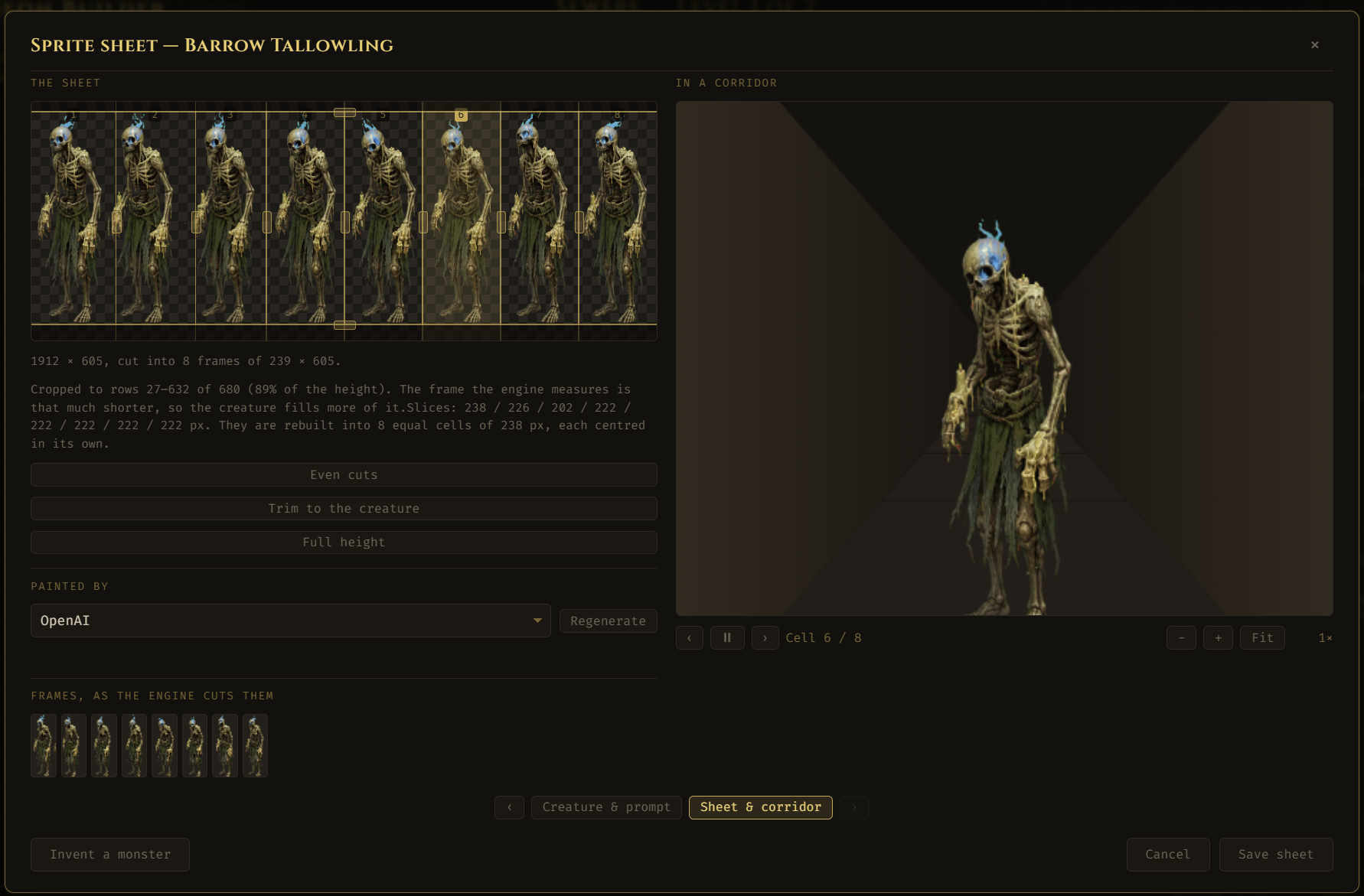
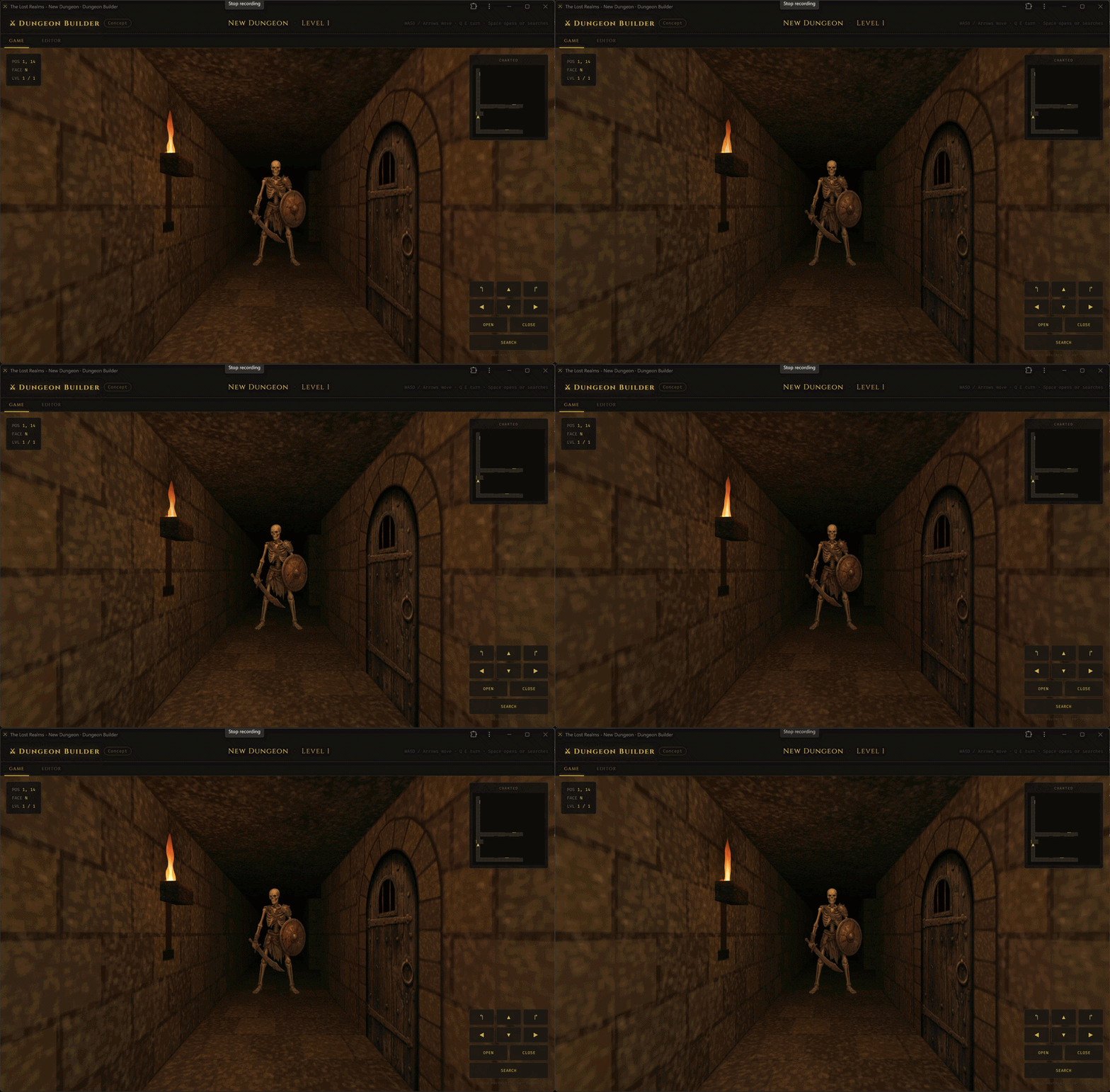
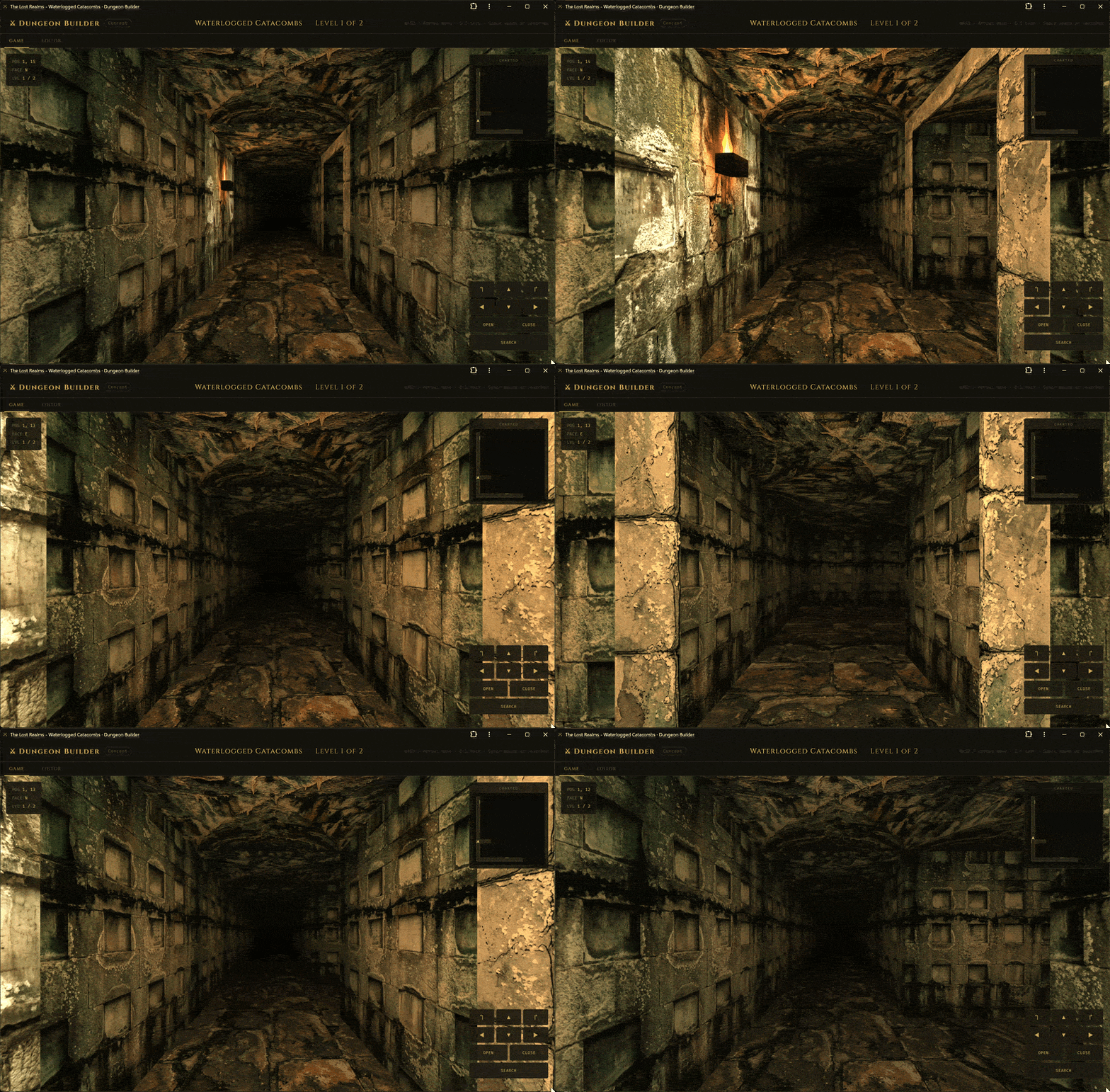
Upload walls, floors, ceilings, doors, stairs, chests and monster sprites — animated strips included.
Hide false walls and concealed doors, then lock the chests behind them for anyone who thinks to search.
Stack levels with stairs up and down and lay out routes that have to be solved, not simply walked.
Every secret is earned
There is no quest checklist telling you what to do. Lore, story beats, and an NPC's deepest confidences unlock only when you draw them out — the right questions, hard-won trust, clues pieced together.
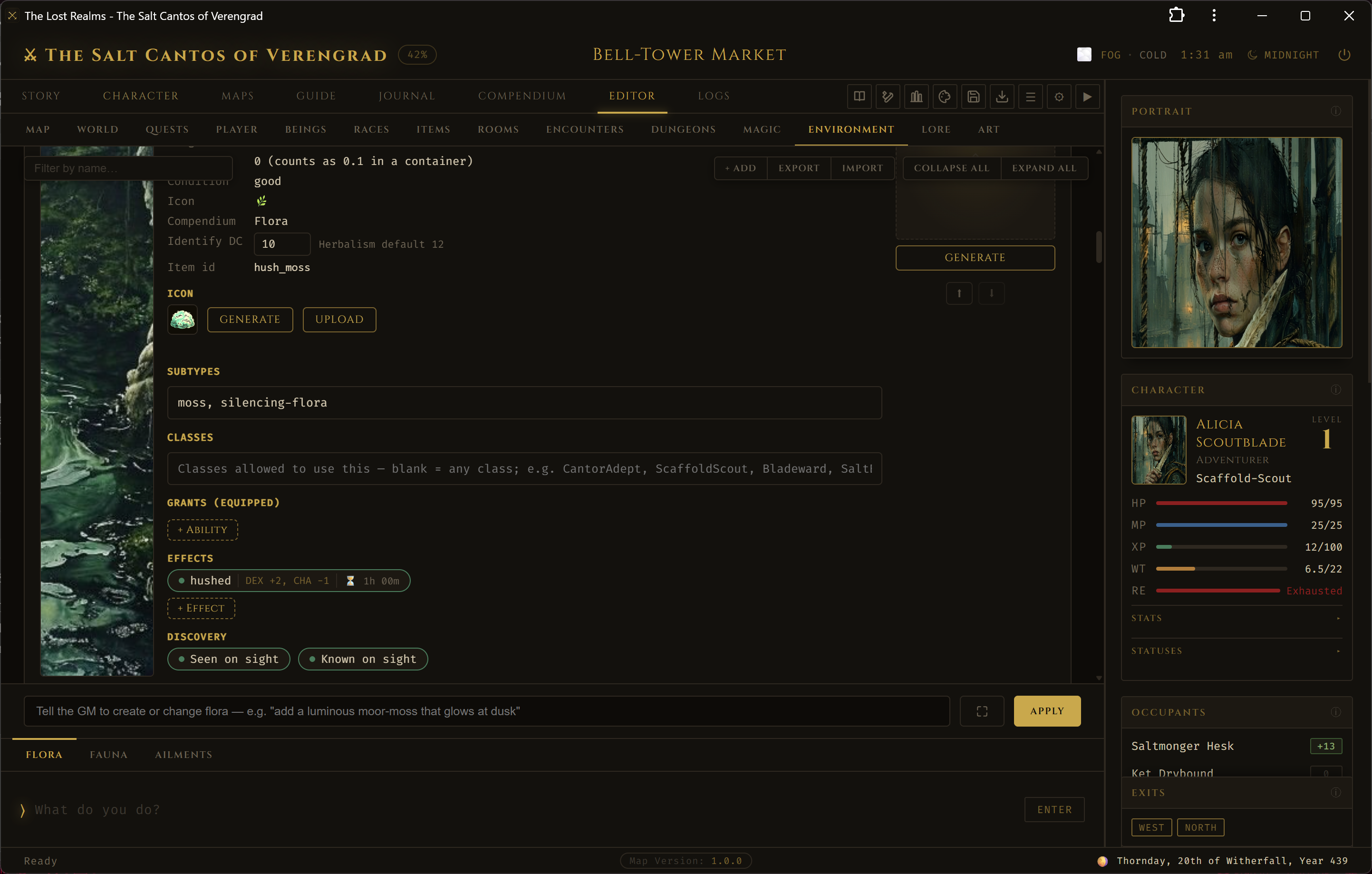
Your Compendium fills itself as you go, one encounter at a time.
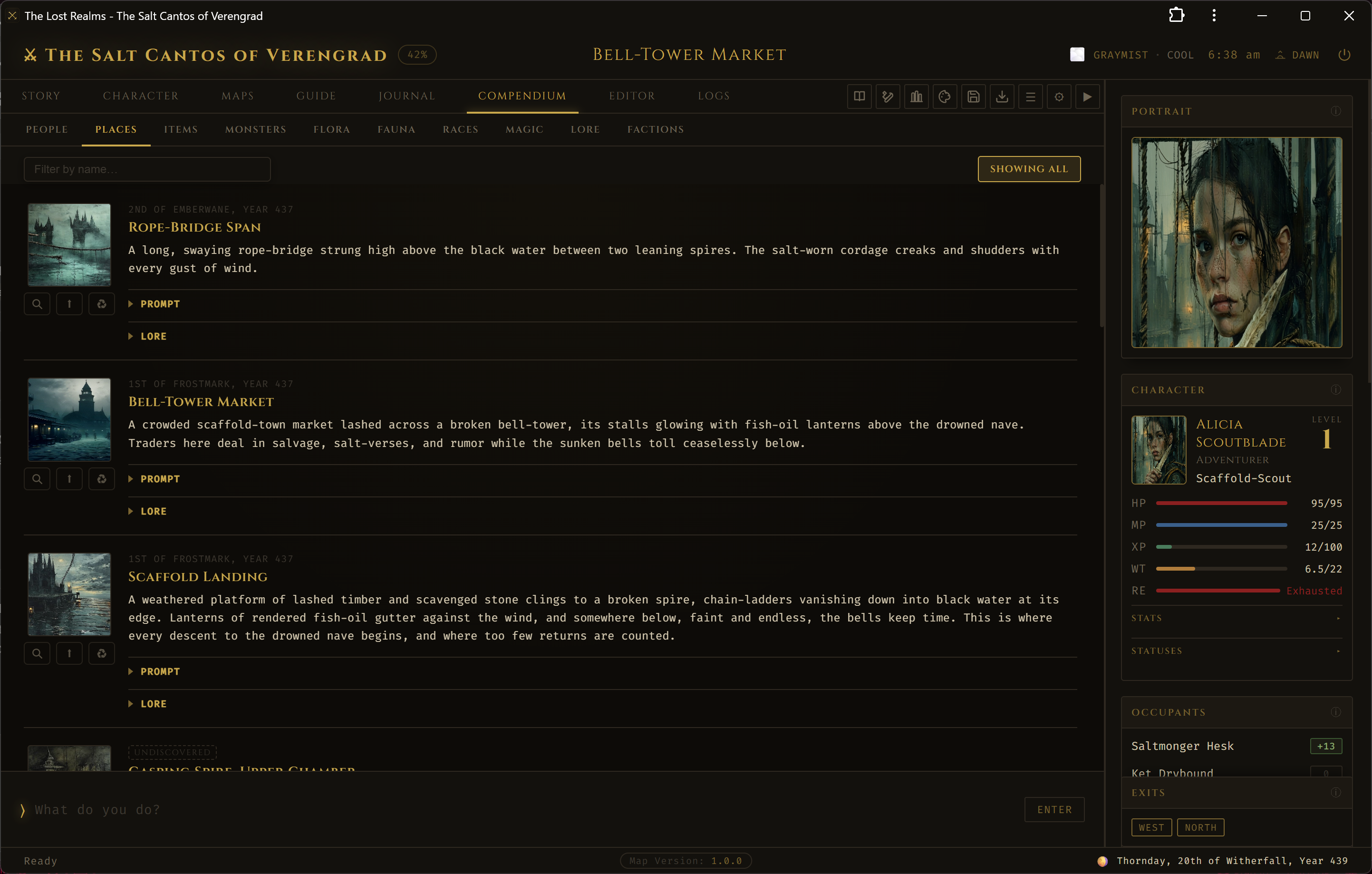
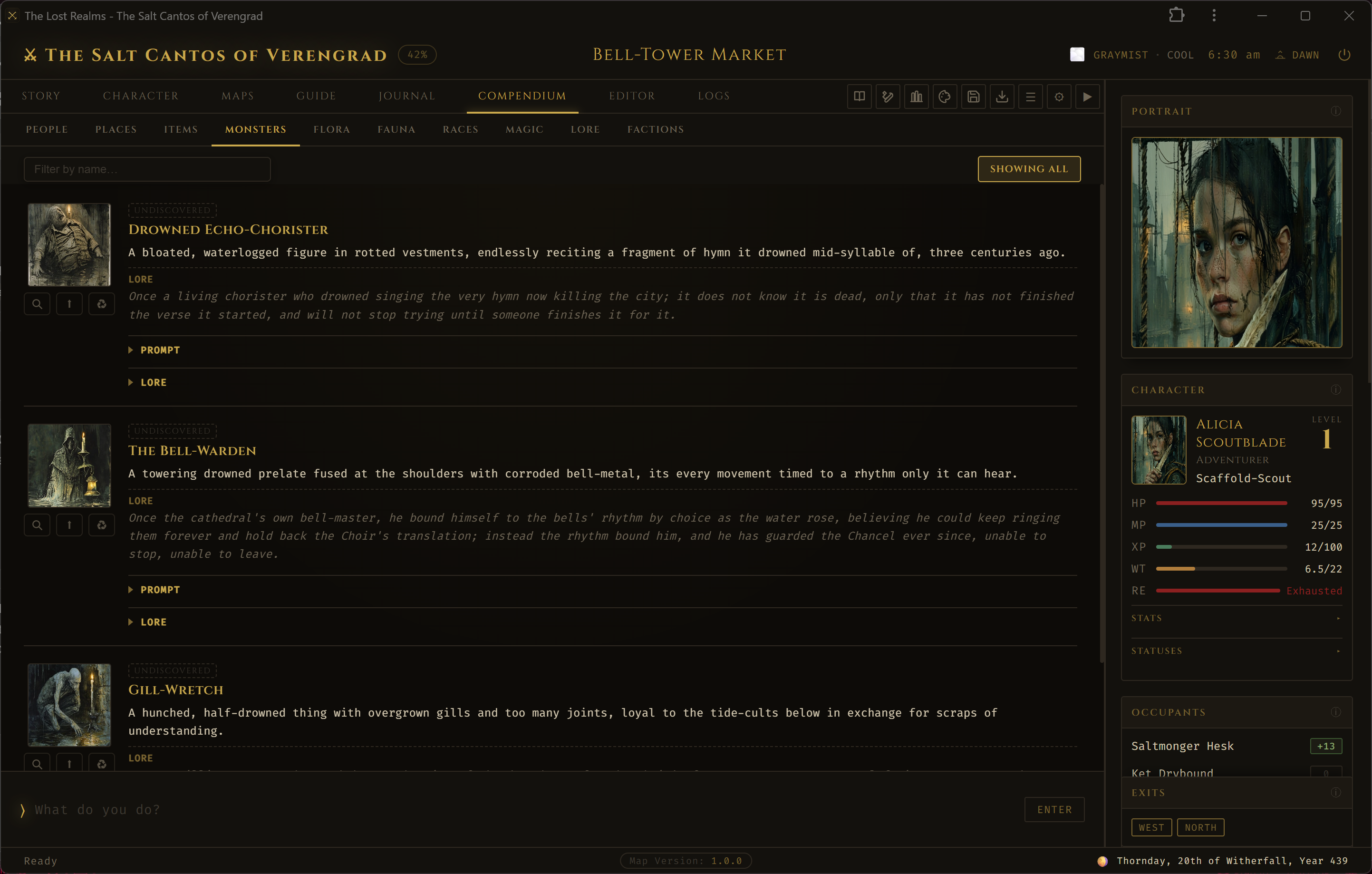
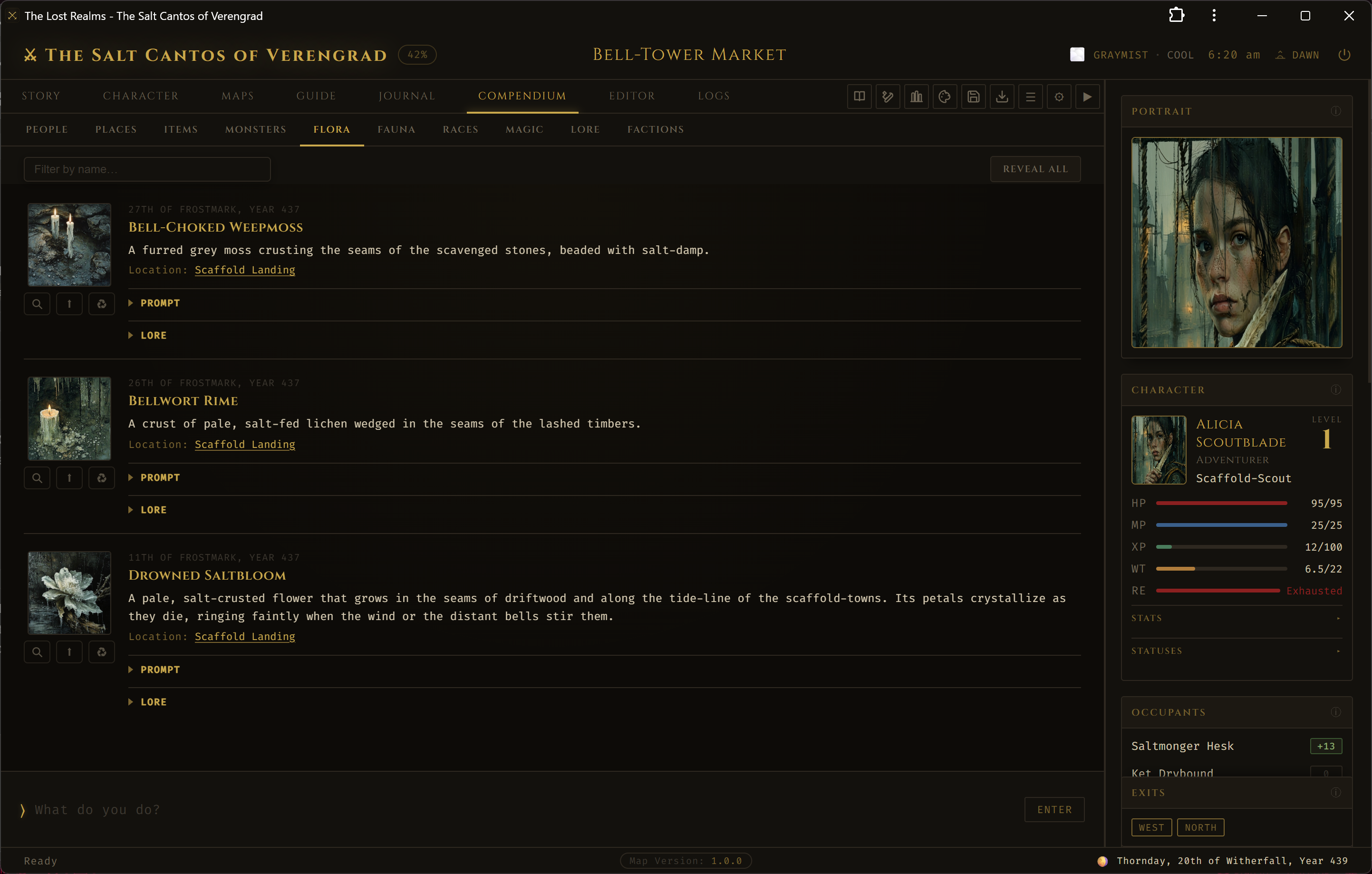
Forge worlds of your own
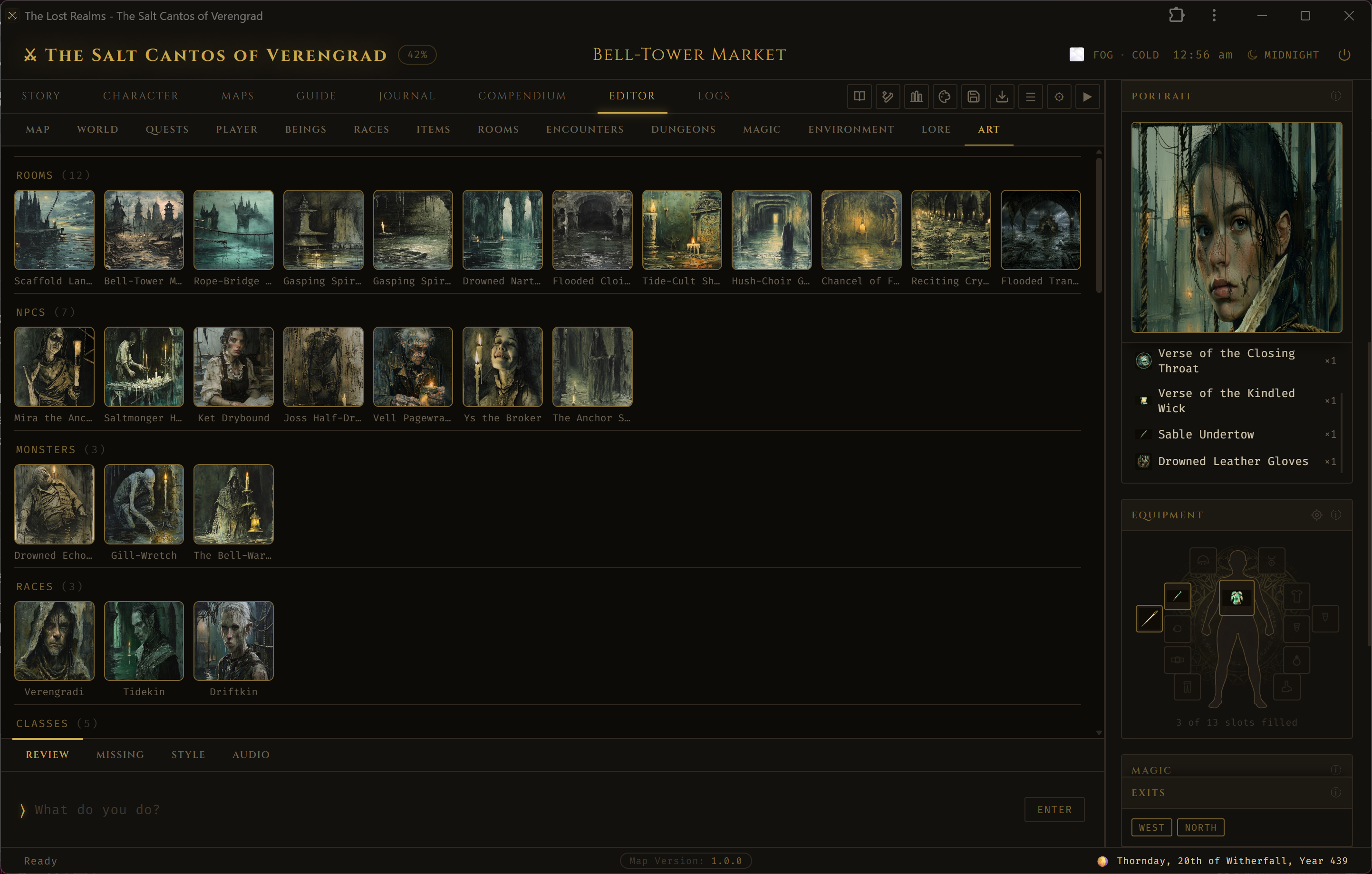
Describe a theme and the AI forges a whole realm — rooms, people, quests, and lore. Then edit anything just by asking, and share the world as a single file.
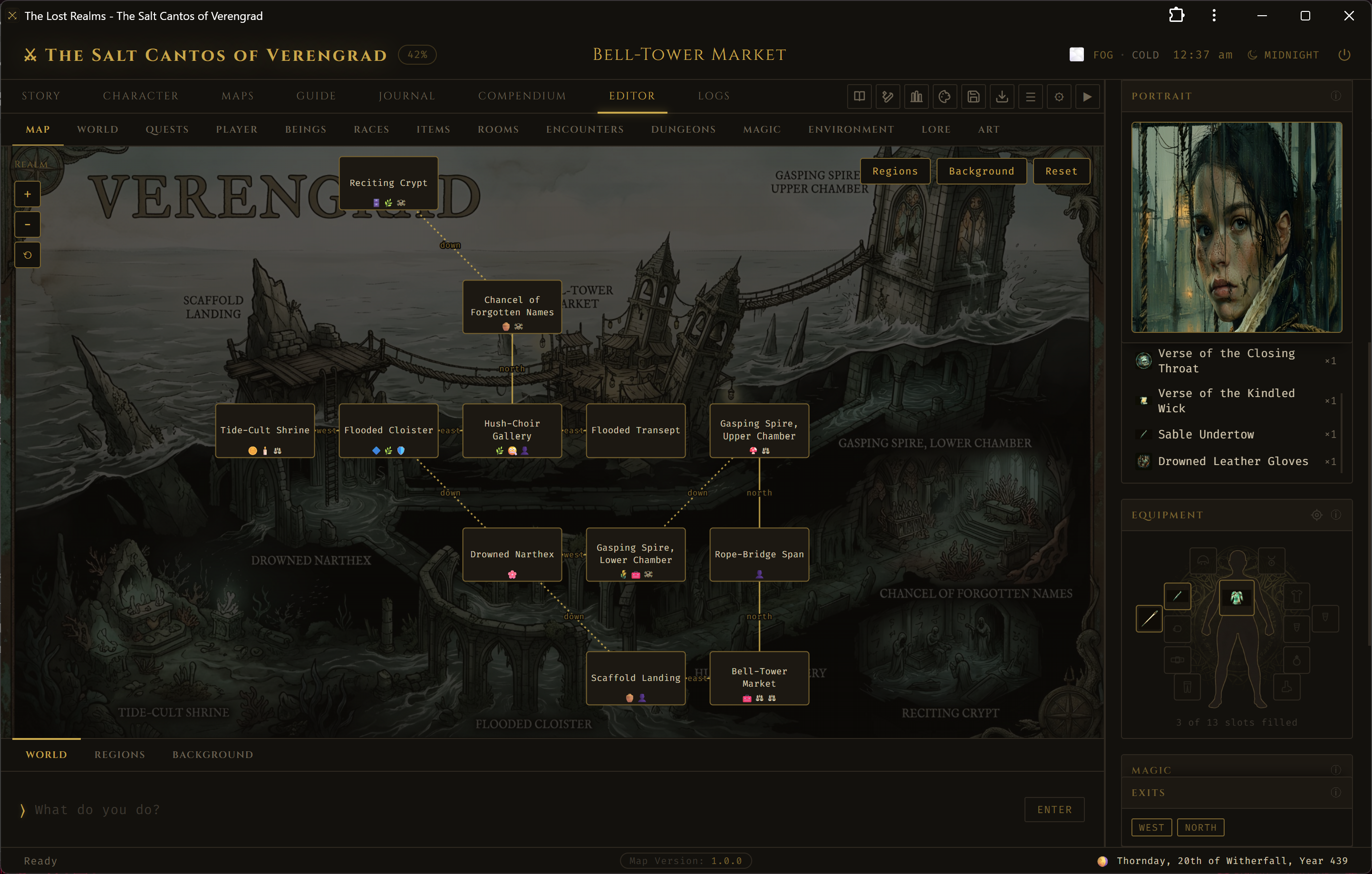
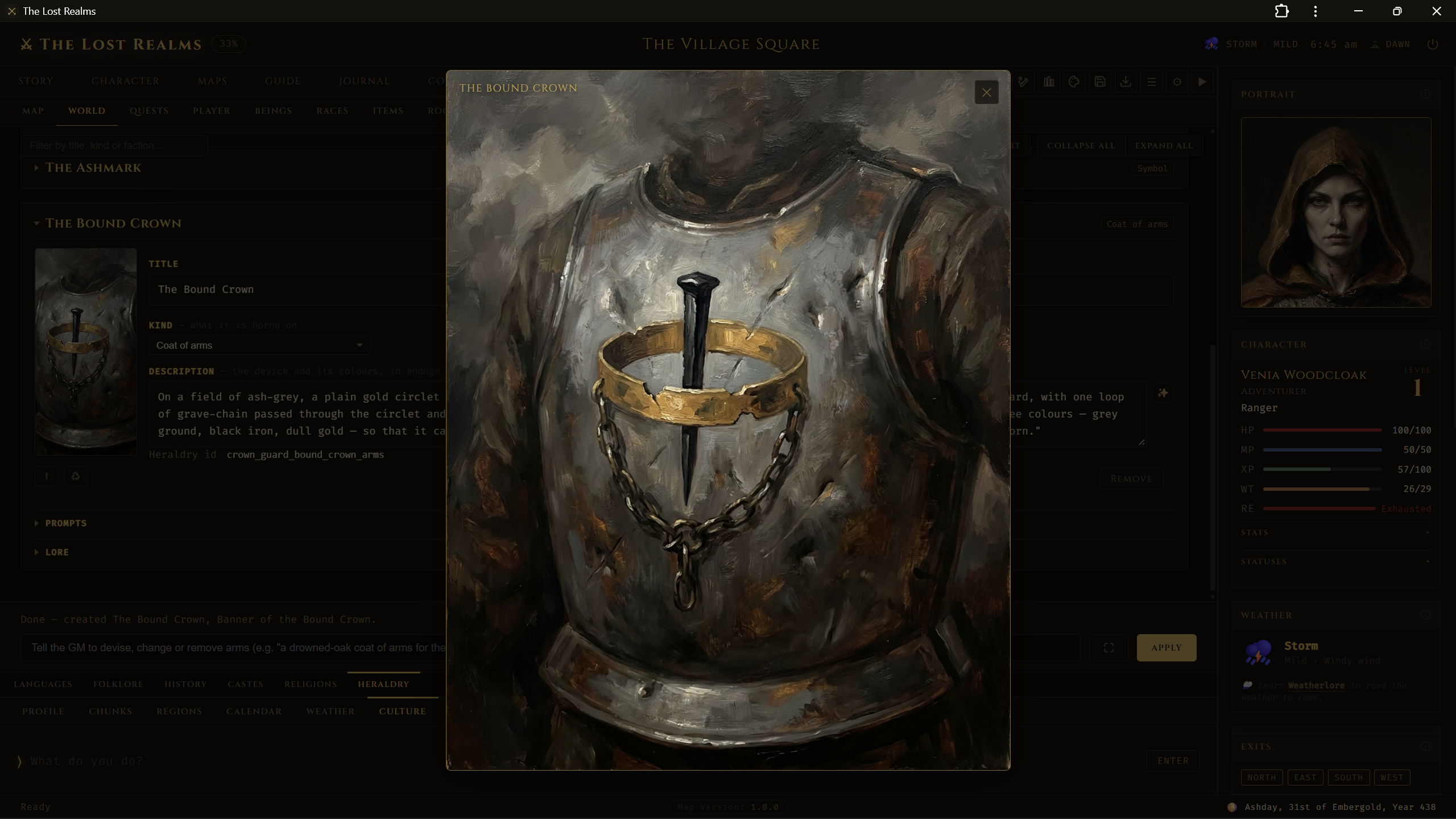
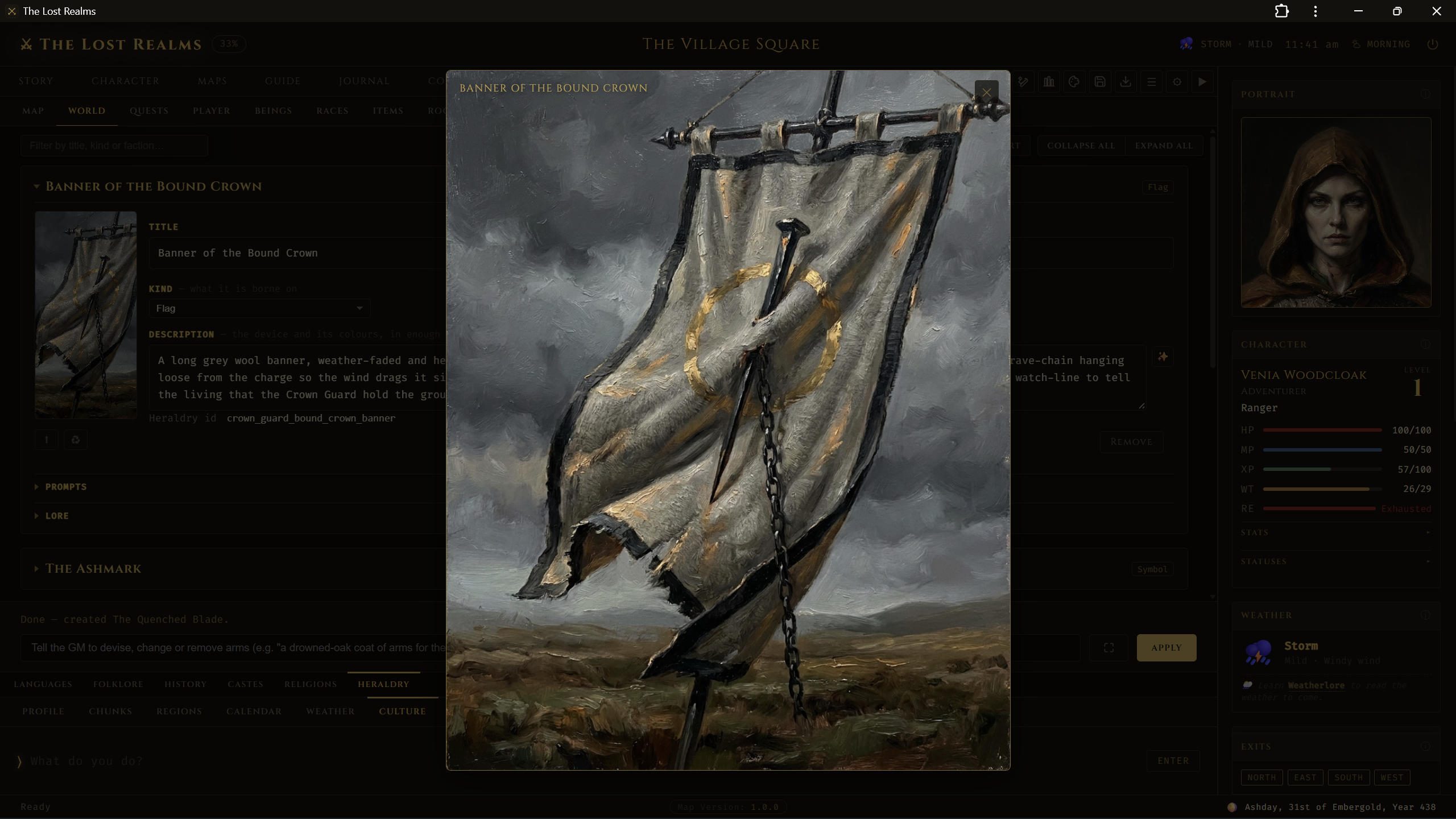
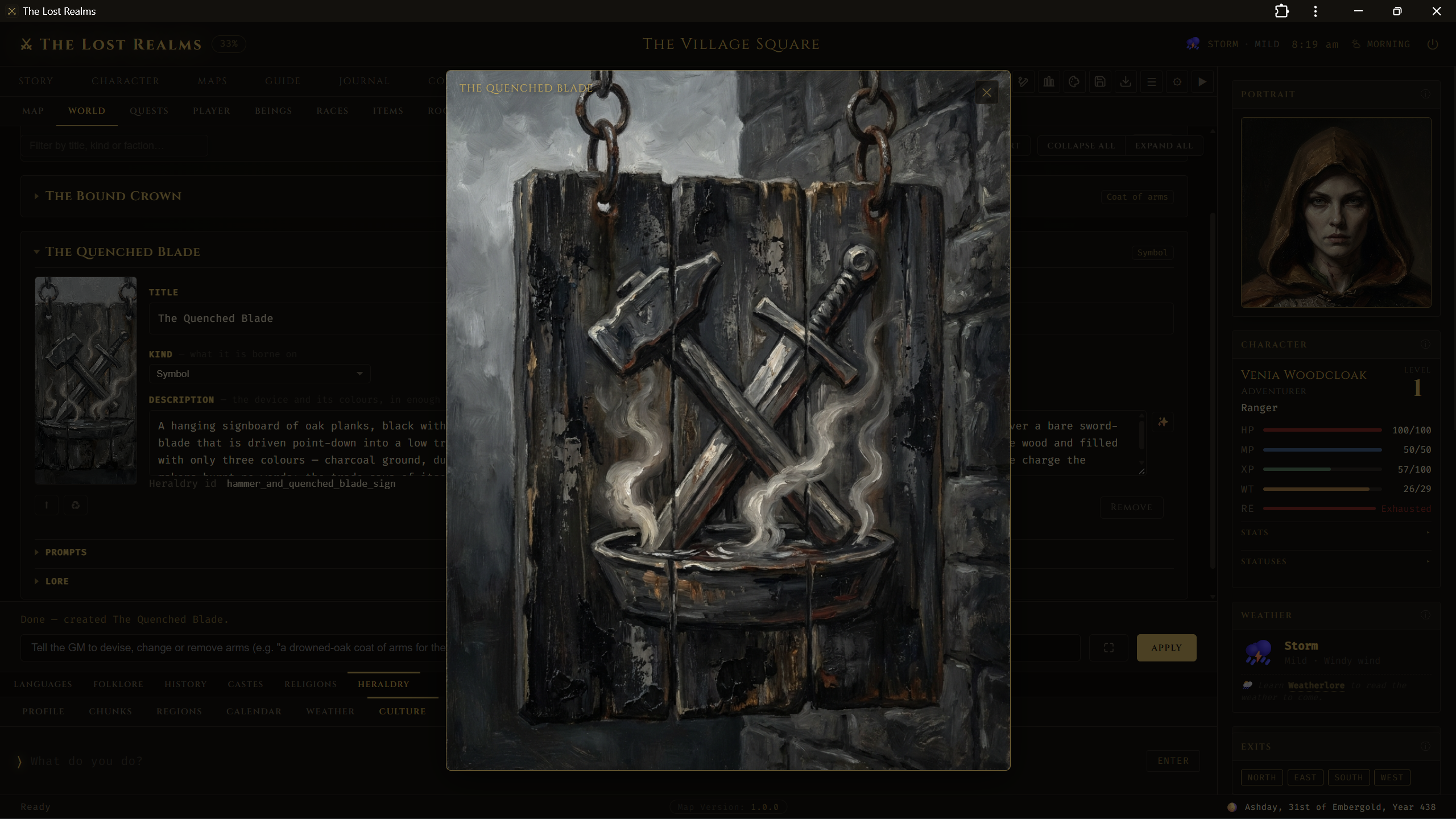
Arms your factions actually bear
Every order, guild and tavern can carry a device of its own — a coat of arms, a banner, a signboard swinging over a door. Ask the Game Master for one and it is blazoned in words, painted, and filed against the faction that owns it.
Three colours, one charge, and a reason it is borne. Change your mind and say so — the arms are redrawn and the description follows.
Generate unique languages for your world
Describe the tongue — who speaks it, how it sounds, what it looks like on the page — and the alphabet is generated from that description: twenty-six drawn letterforms and a lexicon to match, not a substitution cipher. Re-generate until the script looks the way you heard it.
Then set down books in that tongue — histories, treatises, grimoires — and leave them on shelves and corpses for players to find. An illiterate character sees only glyphs. Players can pick up individual words as they go, or study the whole language, and the page resolves into words a line at a time.
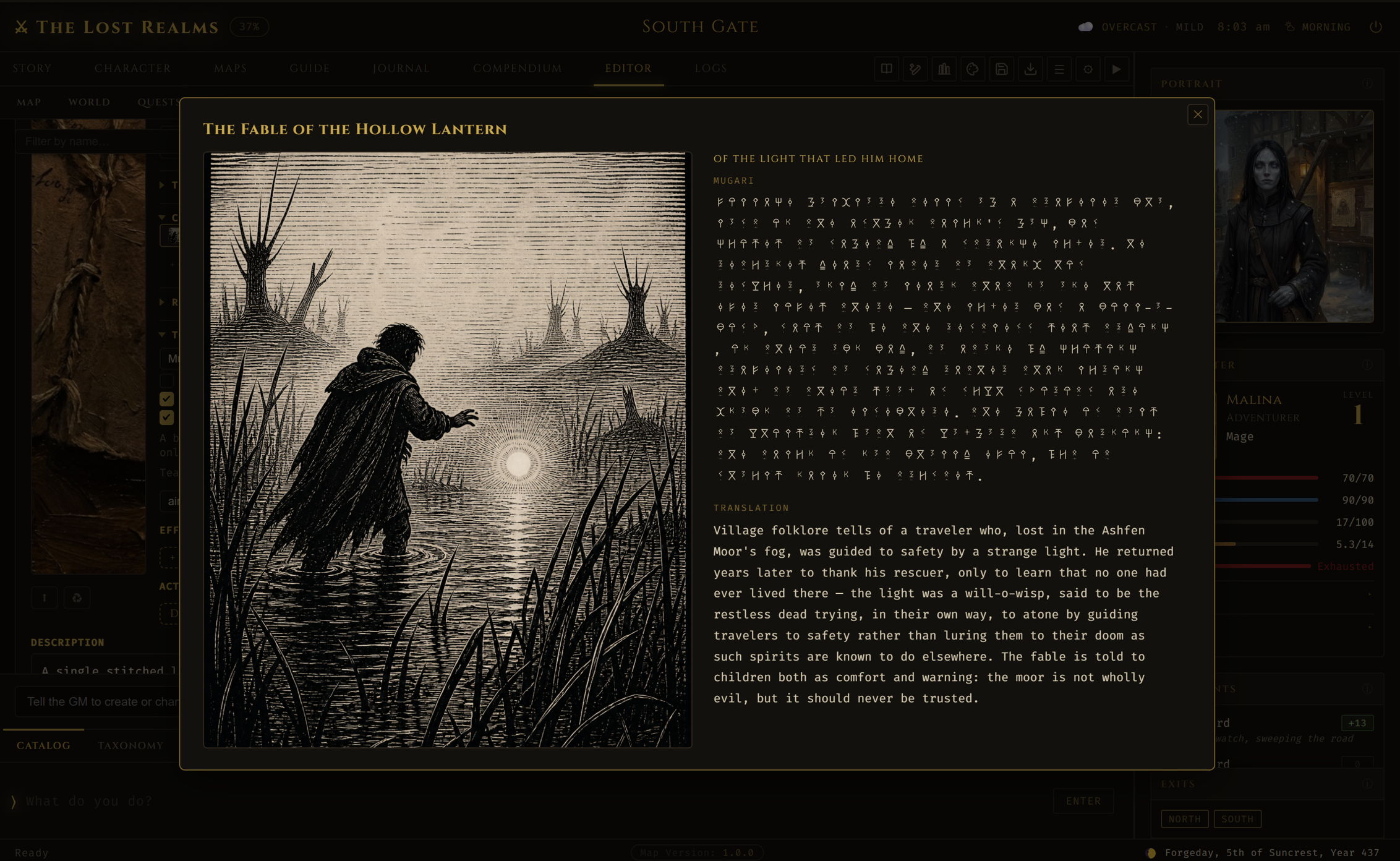
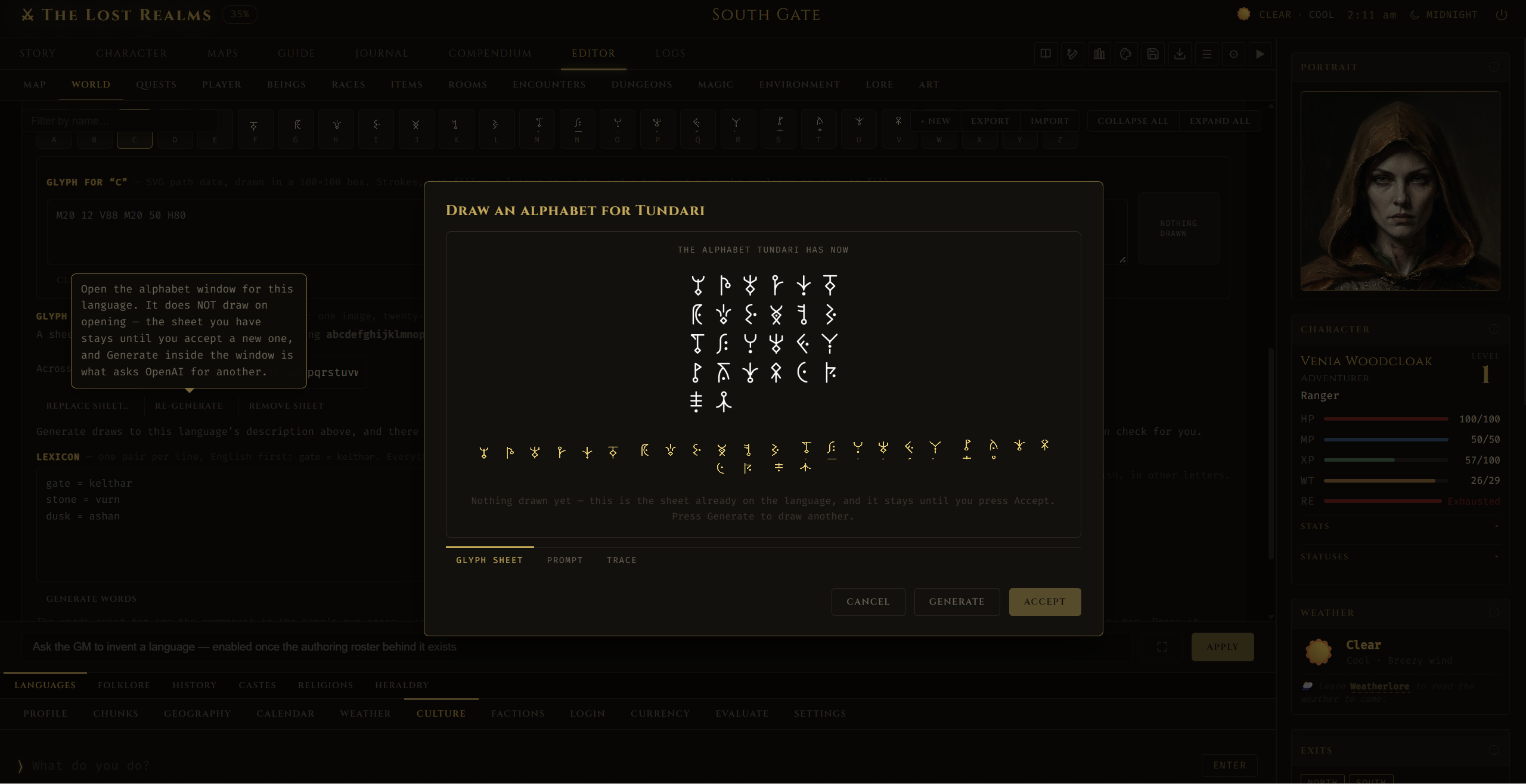
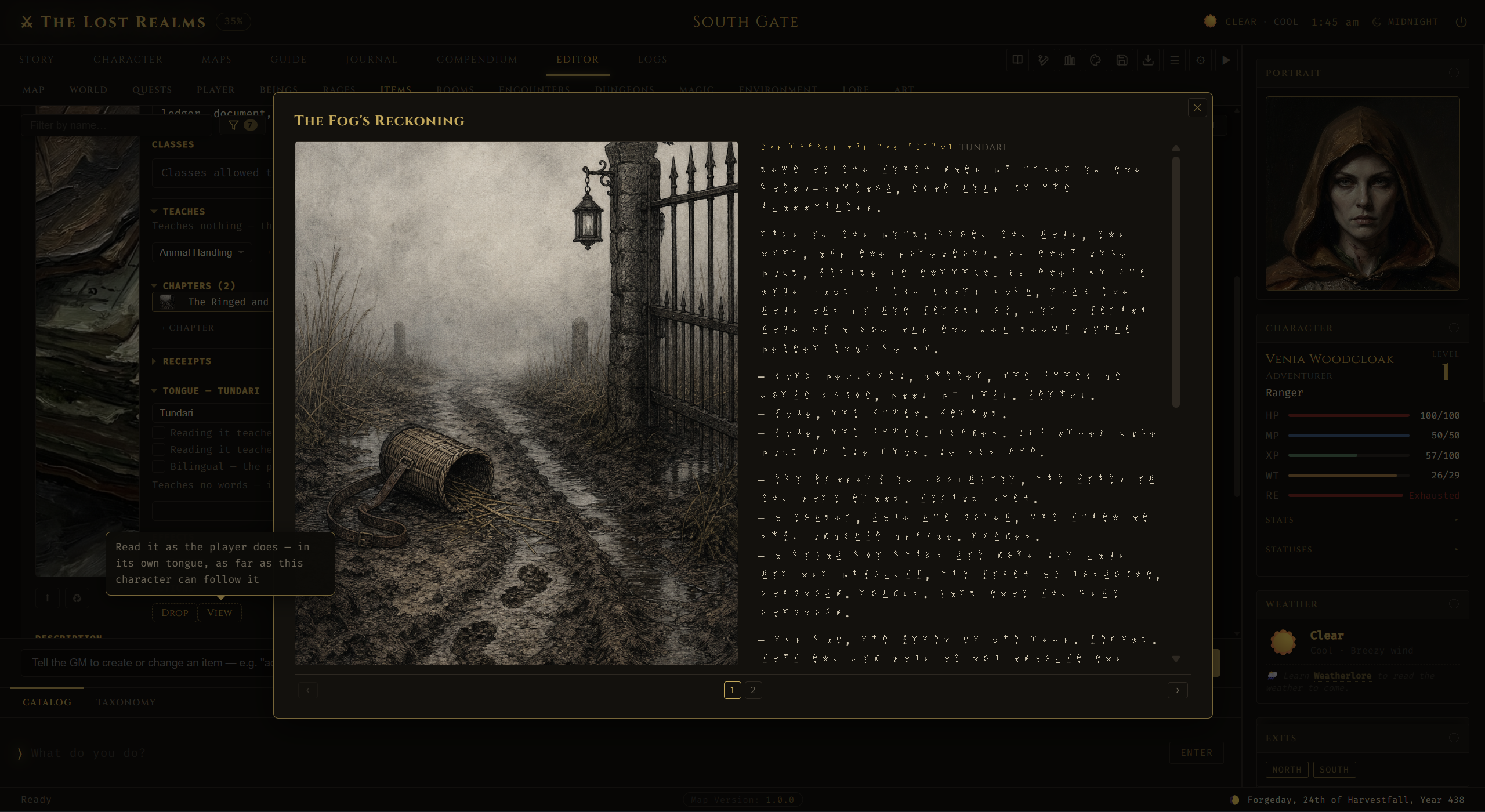
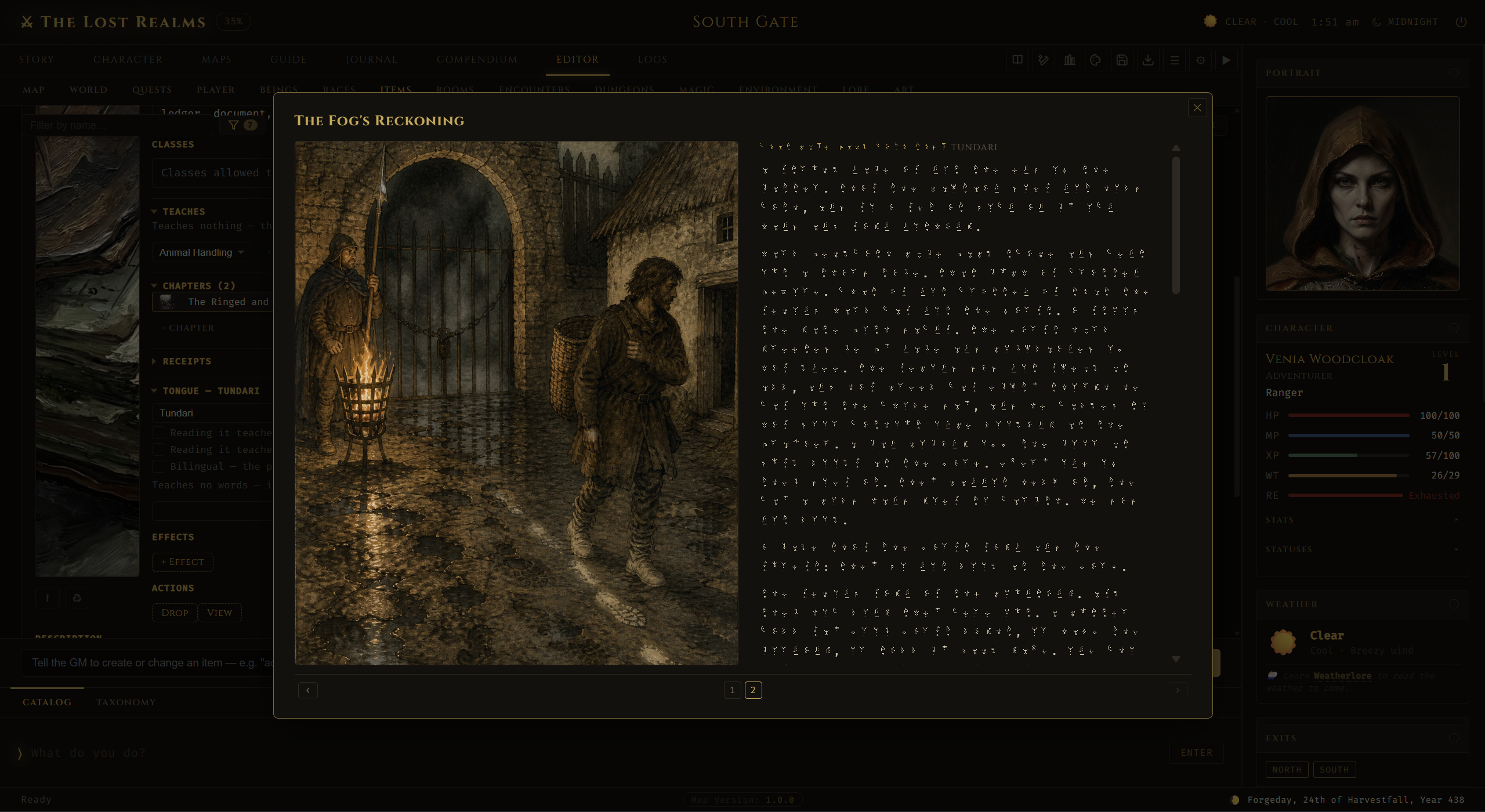
Twenty-six glyphs as drawn letterforms, with a lexicon behind them, so the script holds together wherever it appears.
Chapters, illustrations and a tongue of their own — lore, craft or magic, written for anyone who can read it.
A book is read as far as the character can follow it. Learn the language and the same volume gives up more each time.
And so much more!
No command words. Speak in intentions and be understood.
Reputation shifts with how you act — and gates what they'll share.
The whole game in a single page, driven by your own API key.
Ships a manifest and service worker — play it like a native app.
Your journey begins
with a single sentence.
Bring your own Claude API key. The realm supplies everything else.
Begin Your Journey ▸